The audio edition couldn't be loaded right now — the written post below has everything.
AI-driven product development has collapsed build, test and release timelines. What changed in the SDLC, what did not, and how to ship your product faster.
Executive Summary
For two decades, the economics of human-driven product development were accepted as physics. Shipping an enterprise product meant staffing a large engineering team against a single codebase, absorbing the coordination overhead that comes with it, and budgeting twelve to eighteen months before the first customer touched the result. Timelines were long because every line was hand-written; costs were high because every hand belonged to an engineer.
That physics no longer holds. AI has restructured the software development lifecycle — not evenly, but decisively:
Requirements gathering and solution design remain human work, largely unchanged in shape and duration.
Development time has collapsed. GitHub and Accenture measured 55% faster task completion among AI-assisted developers; McKinsey attributes up to a 30% reduction in time-to-market to AI-enabled delivery, with early-stage build costs falling by as much as 80%. In Symprio's own product engineering practice, build phases that once consumed ten engineer-weeks now routinely close in one — an order-of-magnitude compression. (Source: First Line Software, citing GitHub + Accenture and McKinsey)
Testing is now automated, faster, and more accurate, with AI-generated test cases, self-healing scripts, and predictive test selection cutting continuous integration cycle times by 30–60%. (Source: DevX — CI/CD in the AI Era)
Releases ship faster than ever, with AI-augmented CI/CD pipelines predicting failures, repairing broken builds, and rolling back on anomaly without human intervention.
The world has changed with the help of AI. This briefing sets out where the lifecycle compressed, where it did not, and what that means for any organisation considering building its own product.
1. The Cost Structure of Human-Driven Development
The traditional model carried three structural costs that leadership teams learned to tolerate because there was no alternative.
Headcount concentration. Delivering one enterprise product typically meant fifteen to forty engineers working the same codebase. Beyond a certain team size, each additional engineer added more coordination cost than output — a dynamic documented since The Mythical Man-Month and familiar to every CTO who has watched a project slow down as it staffed up.
Calendar time. Hand-written code, manual regression cycles, and scheduled release windows stretched delivery to twelve or eighteen months for a serious product. In that window, requirements aged, sponsors changed, and market timing slipped.
Cost of iteration. When every prototype consumed weeks of engineer time, organisations rationed experiments. Ideas competed for scarce build capacity, and most died in the backlog rather than in front of a user.
None of this reflected a failure of engineering discipline. It reflected the unit economics of purely human execution. Those unit economics are what AI has rewritten.
2. What Has Not Changed: Requirements and Solution Design
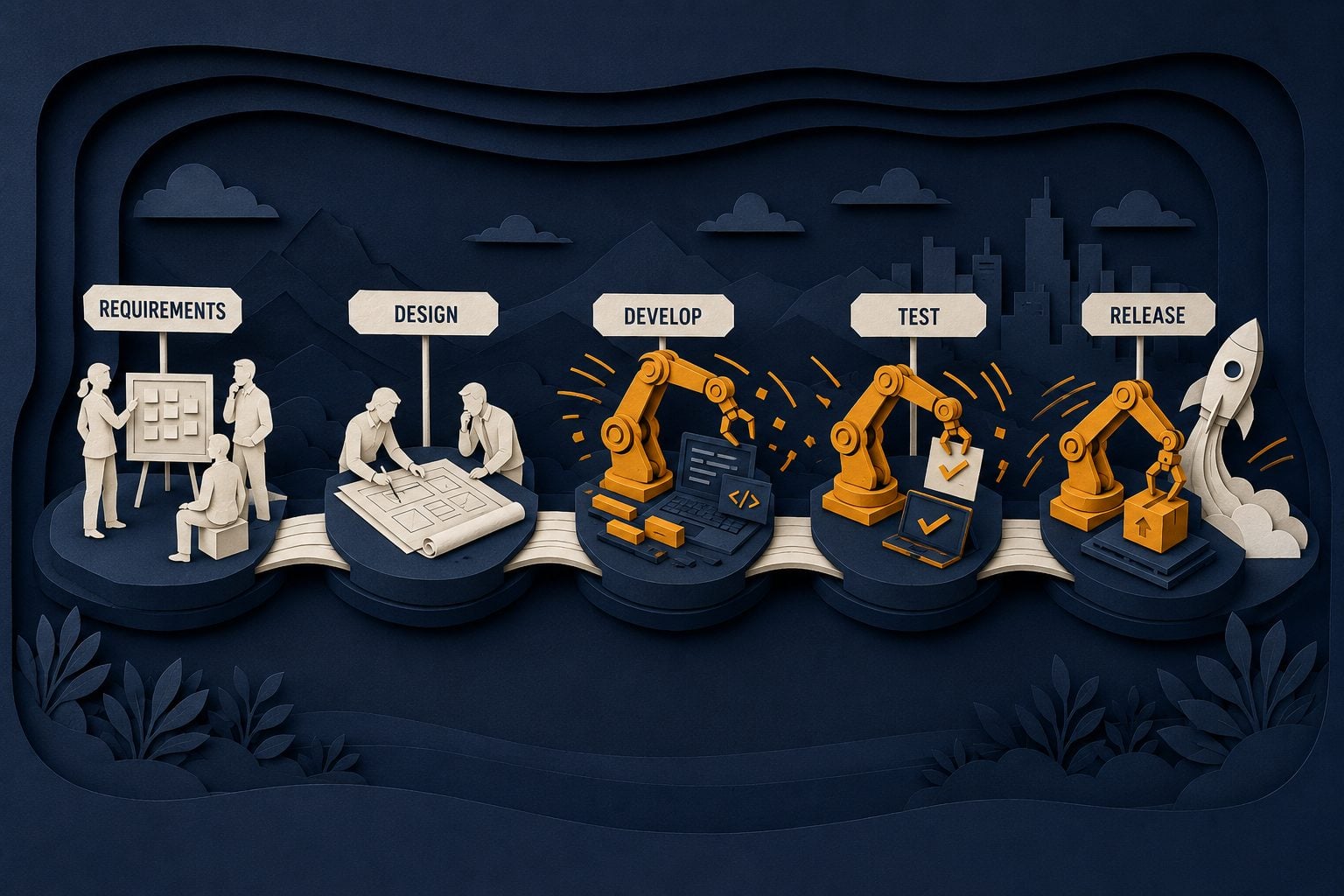
It is important to be precise about what AI did not compress. The front of the SDLC — understanding the business problem, gathering requirements, negotiating scope with stakeholders, and designing the solution architecture — remains fundamentally human work, and takes roughly the time it always took.
This is not a limitation to be engineered away; it is where the value is decided. A requirements workshop with a claims operations team, a data-residency decision for a sovereign-cloud deployment, a trade-off between build and integration — these demand domain judgment, stakeholder trust, and accountability that no code-generation model supplies. The 2025 DORA research reinforces the point: 90% of technology professionals now use AI at work, yet the report is unambiguous that AI amplifies the quality of the surrounding system rather than substituting for it. (Sources: Google Cloud — 2025 DORA Report; DORA 2025)
In other words: the thinking stages held their shape. Everything downstream of them did not.
3. What Has Changed: Development Time
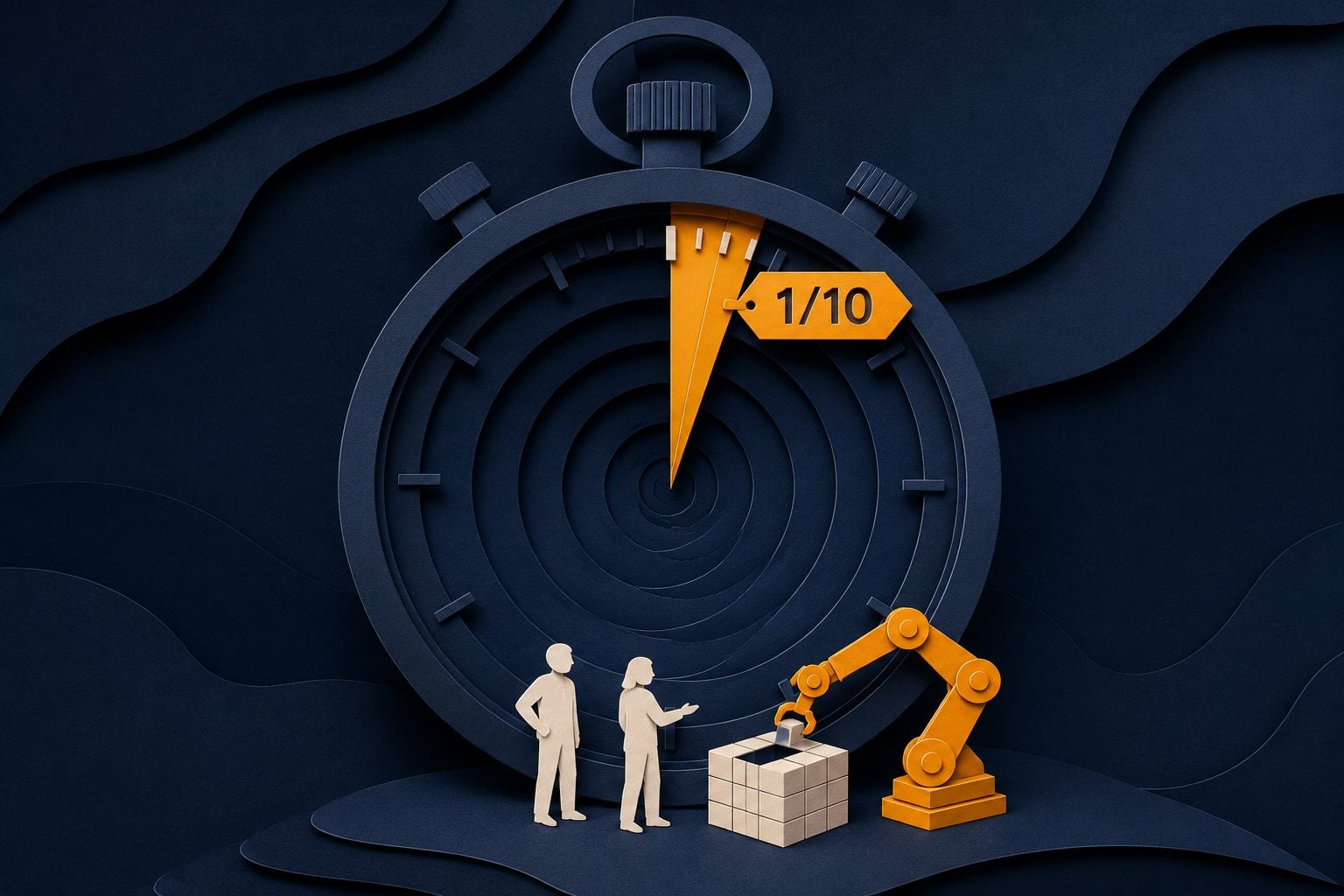
The build phase is where the transformation is starkest.
The industry evidence is consistent. GitHub and Accenture, studying 4,800 developers, measured 55% faster task completion with AI coding assistants. McKinsey estimates AI tooling can automate roughly 45% of software development activities and attributes up to 30% faster time-to-market to AI-enabled delivery, with development costs for early-stage builds falling by as much as 80%. Gartner projects that by the end of 2026, 75% of developers will orchestrate rather than code, supervising agents instead of authoring every line. (Sources: First Line Software; Gitnux — AI in Software Development Statistics)
On the ground, the compression is sharper than the averages suggest. In Symprio's product engineering practice — where our vibe coding workflow pairs tools such as Cursor and Claude Code with enterprise-grade architecture wrapping — build phases that previously required ten engineer-weeks now routinely close in one. Scaffolding, data models, integrations, and first working versions materialise in days. The engineer's role shifts from typing to directing: reviewing, correcting, and composing AI output into a coherent product.
Concretely: a working prototype that once justified a quarter of budget deliberation is now a one-week decision. That single fact changes how product portfolios are planned.
4. Testing: Automated, Faster, and More Accurate
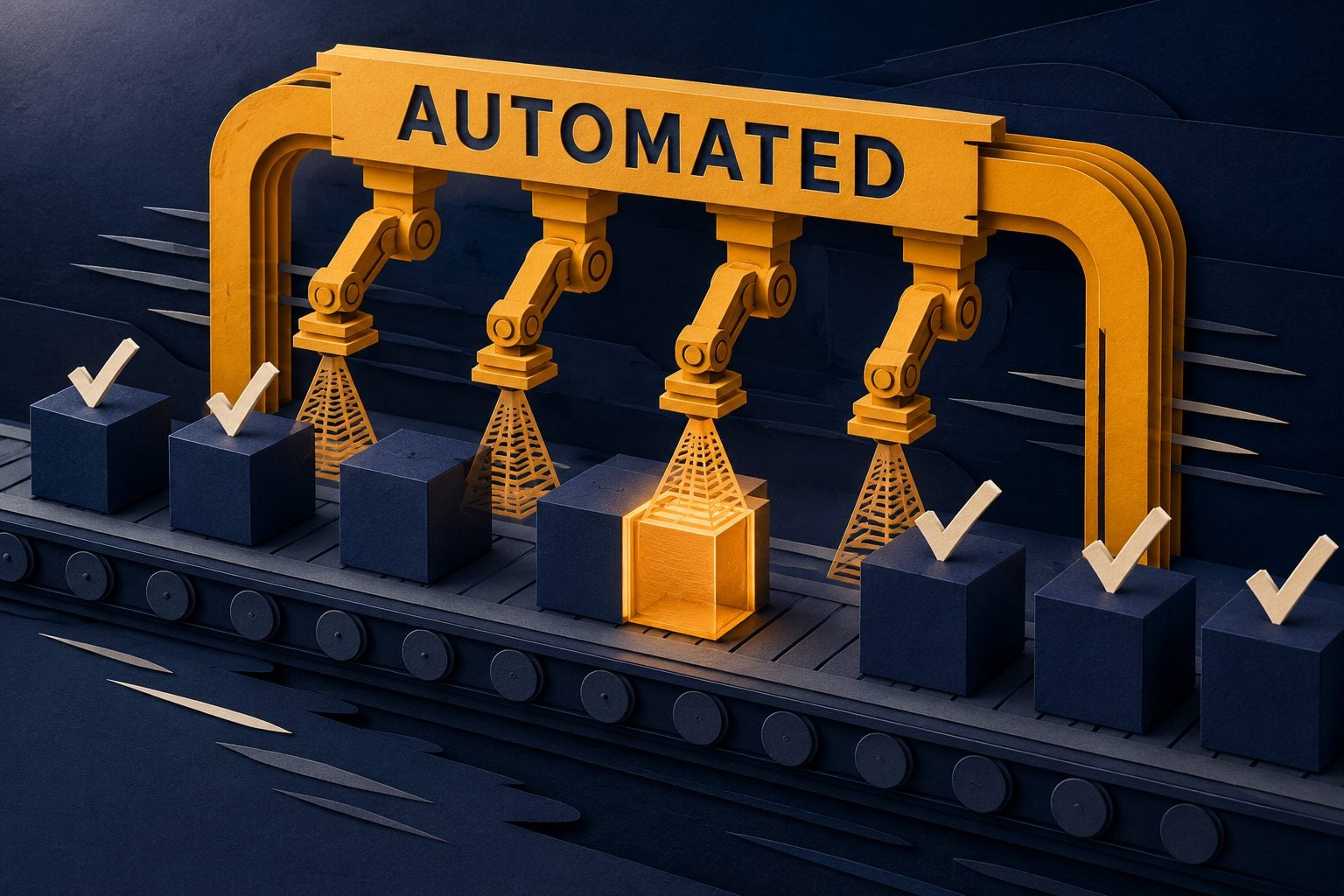
Testing was historically the phase that quietly consumed the calendar. Manual regression cycles could not keep pace with weekly releases, and test maintenance drained QA capacity. AI has changed each part of that equation.
Generation. Modern tooling scans a function signature, infers intent, and produces unit tests in seconds, pushing coverage to levels manual authorship rarely reached. (Source: TestQuality — Test Automation in CI/CD, 2026)
Selection. Predictive test selection runs only the tests most likely to catch defects for a given change. Teams adopting it report 30–60% reductions in CI duration. (Source: DevX)
Accuracy and resilience. Self-healing scripts adapt to UI and environment changes without manual repair, and AI-driven anomaly detection surfaces subtle defects manual passes miss. In a Sauce Labs survey of engineering leaders, more than half of those using AI in testing workflows reported improved coverage and faster defect detection. (Sources: Kobiton — AI-Augmented Testing in CI/CD; DEVOPSdigest)
The market has priced in the shift: the test automation market reached USD 40.4 billion in 2026 and is projected to nearly double by 2031. (Source: TestQuality)
5. Release Velocity: AI in the CI/CD Pipeline
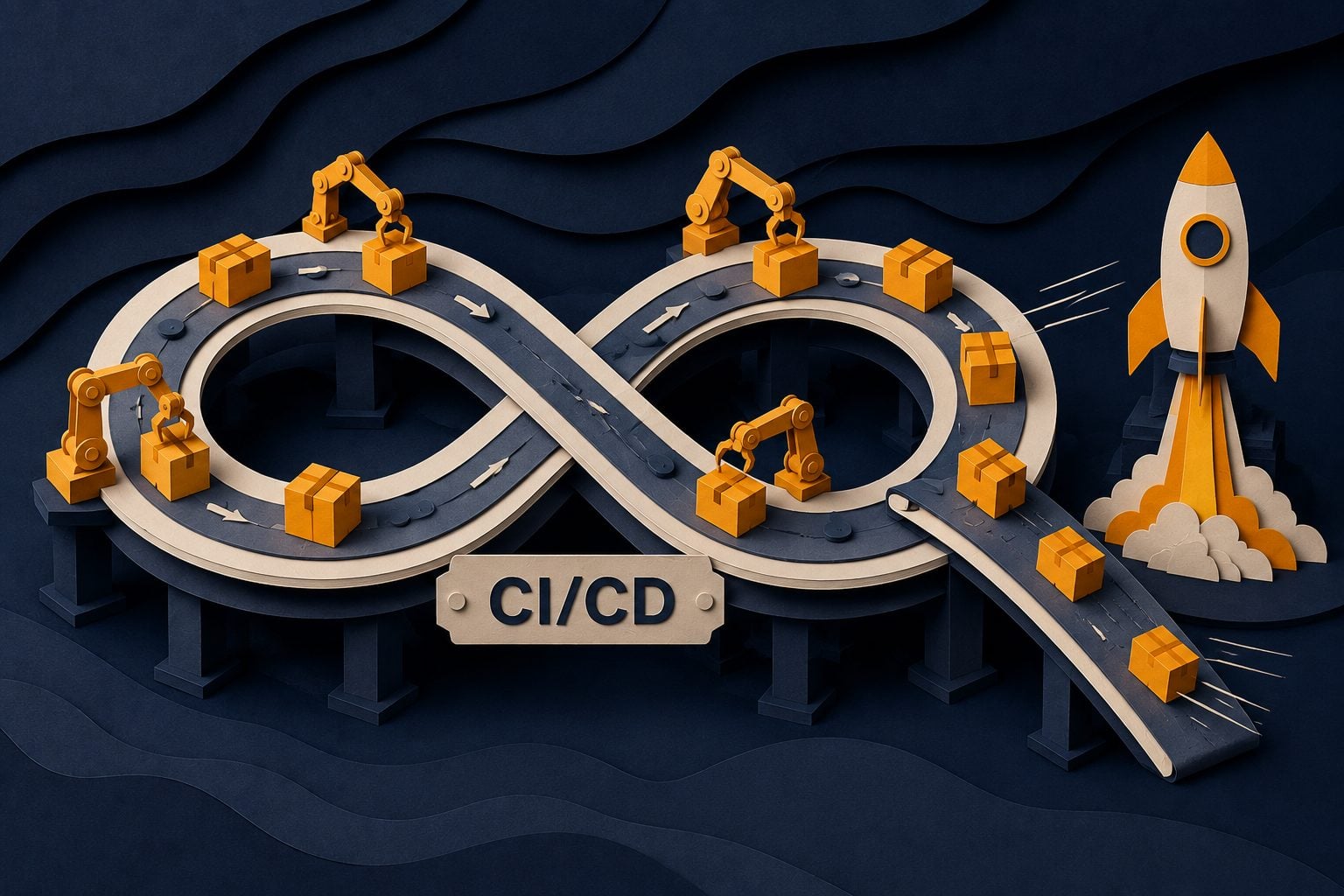
The final stretch of the lifecycle — integrate, verify, deploy — has evolved from a linear conveyor into an adaptive system. AI-augmented pipelines now predict flaky tests before they fire, repair broken builds, route deployments by risk profile, and roll back automatically when production telemetry turns anomalous. (Source: DevX)
The performance frontier reflects it. Elite-performing organisations deploy multiple times per day with change failure rates below 5% — a cadence that was aspirational for most enterprises five years ago and is now the operating baseline for AI-equipped teams. (Source: DevX, citing the Accelerate State of DevOps research)
6. The Numbers, Side by Side
SDLC stage | Human-driven baseline | AI-accelerated, 2026 |
|---|---|---|
Requirements gathering | Human-led workshops, weeks | Unchanged — human-led, weeks |
Solution design | Architect-led, weeks | Unchanged — architect-led, weeks |
Development | Hand-written; large teams, months | 55% faster task completion; build phases compressed to a fraction of prior effort (GitHub + Accenture; Symprio practice observation) |
Testing | Manual regression, days per cycle | AI-generated tests, predictive selection; CI cycles cut 30–60% (DevX) |
Release | Scheduled windows, monthly or quarterly | Multiple deployments per day at <5% change failure among elite performers (Accelerate/DORA) |
Early-stage build cost | Full engineering payroll | Up to 80% lower (First Line Software) |
The pattern holds in this market, too: 65% of Malaysian firms that have adopted AI report higher revenues, averaging a 19% increase, and 72% cite significant productivity gains — evidence gathered as the National AI Office prepares Malaysia's AI Technology Action Plan 2026–2030. (Source: US-ASEAN Business Council)
Translation for the boardroom: the bottleneck has moved. It is no longer engineering capacity. It is the quality of the ideas and decisions you feed the machine.
7. The Symprio Approach: Compression Without Corner-Cutting
Symprio builds AI-enabled products for Malaysian enterprises — we do not merely advise on them. Four principles govern how we convert the speed described above into products that survive contact with production and regulators.
Humans hold the front of the lifecycle. Requirements, solution design, and architecture are led by senior engineers and domain specialists working directly with your stakeholders. AI accelerates everything downstream of the decision; it does not make the decision.
AI carries the build. Our vibe coding practice treats code generation, test scaffolding, and documentation as an industrialised pipeline, wrapped in enterprise architecture so the output is maintainable, not merely fast. Explore our AI product engineering services →
The harness protects the speed. Compression without discipline is how organisations end up in the 95% of generative AI pilots that deliver no measurable P&L impact. Our builds ship inside an engineering harness — automated evaluation, review gates, audit logging — aligned to Malaysia's AIGE governance principles and BNM technology risk expectations, so velocity survives compliance review. (Sources: Fortune / MIT NANDA; NAIO)
Co-build, then transfer. Our adopt-and-build model pairs Symprio engineers with your team, ships the first product to production in weeks, and certifies your team to operate and extend it. The compressed timeline becomes your capability, not our retainer. Learn about our co-build delivery model →
8. What This Looks Like in Practice
Within 90 days of engagement — a window in which the traditional model would still be drafting technical specifications — enterprise teams typically ship deployments such as:
An AI-enabled SME onboarding and credit pre-screen agent, from requirements workshop to production pilot.
A claims intake co-pilot drafting assessments for licensed assessors, live within a single quarter.
A finance reconciliation agent that closes the month five days faster, built and deployed in weeks.
An internal knowledge assistant trained on operations manuals, with cited answers, shipped alongside the above rather than instead of it.
An LHDN MyInvois e-invoicing middleware integration delivered in parallel by the same lean team.
These are not moonshots. They are what the new unit economics make routine: several products in the time one used to take.
9. Thinking of Building Your Own Product in a Short Time? Reach Out
If you have a product idea that has been waiting on budget, headcount, or a vendor quote measured in years — the mathematics have changed, and it is worth re-running them. Symprio engages in three formats:
Discovery workshop (half-day, complimentary). A working session with your senior team to define the product worth building first.
Pilot engagement (8–12 weeks). Co-build your first product to production, including architecture transfer and team enablement.
Long-term partnership. Embedded capacity to ship a portfolio of products over a 12–24 month horizon.
Reach out to the Symprio team today — tell us what you want to build, and we will come back with an architecture sketch and timeline within 48 hours.
Reach out to build your product → · Request a discovery workshop →
Frequently Asked Questions
How much faster is AI-driven product development?
Industry studies measure 55% faster task completion for AI-assisted developers and up to 30% faster time-to-market overall. In well-engineered pipelines, the build phase specifically can compress by an order of magnitude, because code generation, test scaffolding, and documentation run at machine speed under human direction.
Which SDLC stages does AI change the most?
Development, testing, and release. Code generation collapses build time, AI test generation and predictive selection cut CI cycles by 30–60%, and AI-augmented CI/CD pipelines enable multiple deployments per day. Requirements gathering and solution design remain human-led and largely unchanged in duration.
Do requirements gathering and solution design change with AI?
Not materially. Understanding the business problem, negotiating scope, and designing the architecture still require domain judgment, stakeholder engagement, and human accountability. AI can assist with documentation and analysis, but the shape and duration of these stages remain close to the traditional model.
Is AI-driven test automation accurate?
Yes, and increasingly so. AI-generated tests broaden coverage, self-healing scripts adapt to interface changes without manual repair, and anomaly detection catches subtle defects manual regression misses. Engineering leaders surveyed report improved coverage and faster defect detection, with human oversight retained for exploratory and usability testing.
How quickly can a Malaysian enterprise build a custom AI-enabled product?
With an AI-accelerated delivery model, a production pilot in 8–12 weeks is a realistic target for products such as onboarding agents, claims co-pilots, or reconciliation automation — provided requirements and architecture are properly led by humans and the build runs inside a governed engineering pipeline aligned to frameworks such as AIGE.
Sources & Further Reading
First Line Software — AI Software Development: What Changes from 2026 to 2035
Gitnux — AI in the Software Development Industry Statistics 2026
Google — Inside Google's 2025 DORA report
DORA / Google Cloud — State of AI-assisted Software Development 2025
DevX — CI/CD in the AI Era: Pipelines That Build, Test, and Deploy Themselves
TestQuality — Best Practices for Implementing Test Automation in CI/CD
Kobiton — AI-Augmented Testing in CI/CD Pipelines
DEVOPSdigest — From Automation to Intelligence: How AI Will Redefine DevOps in 2026
Fortune — MIT report: 95% of generative AI pilots at companies are failing
US-ASEAN Business Council — Malaysia Accelerates National AI Agenda
Malaysia National AI Office (NAIO) — AI Governance
International Trade Administration — Malaysia AI Governance Framework
#Symprio #BuildNotBuy #EnterpriseAI #AIProducts #VibeCoding #Automation #DigitalTransformation #Malaysia
Symprio — enterprise AI products, engineered for Malaysian regulatory reality. Designed by humans. Built at AI speed.