The audio edition couldn't be loaded right now — the written post below has everything.
AI designed a working genome. Two weeks later the industry split over open weights. Both stories are the same AI model security question — here's the answer.
🧬 Two Stories, Two Weeks Apart
Late July 2026. Nvidia organises an open letter, co-signed by Hugging Face, Meta, Microsoft, Mistral and others, urging policymakers not to impose broad "premature restrictions" on open-weight AI models (Source: TechCrunch).
6 August 2026. Science publishes a Stanford and Arc Institute study in which AI-generated designs became 16 functional bacteriophages — viruses that had never existed in nature, assembled in a lab from genomes a model wrote (Source: Science Media Centre).
Most coverage treated these as unrelated: one a policy story, one a science story.
They are the same story. Both are asking the identical question, and it is the central question of AI model security in 2026:
When a model is capable of producing something dangerous, where does the safeguard live — inside the weights, or outside them? And who is able to remove it?
The numbers that frame it:
285 AI-designed genomes physically tested; 16 produced working viruses — a ~5% hit rate (Source: Arc Institute)
Thirteen of those genomes carried mutations found in no known natural sequence (Source: Arc Institute)
The models used cannot generate human viral sequences — because those sequences were deliberately excluded from training (Source: Arc Institute)
Hold that last bullet. It is the hinge the entire open-weights argument turns on.
🔬 Story One: A Model Wrote Biology That Worked
Precision first, because the headlines were sloppy.
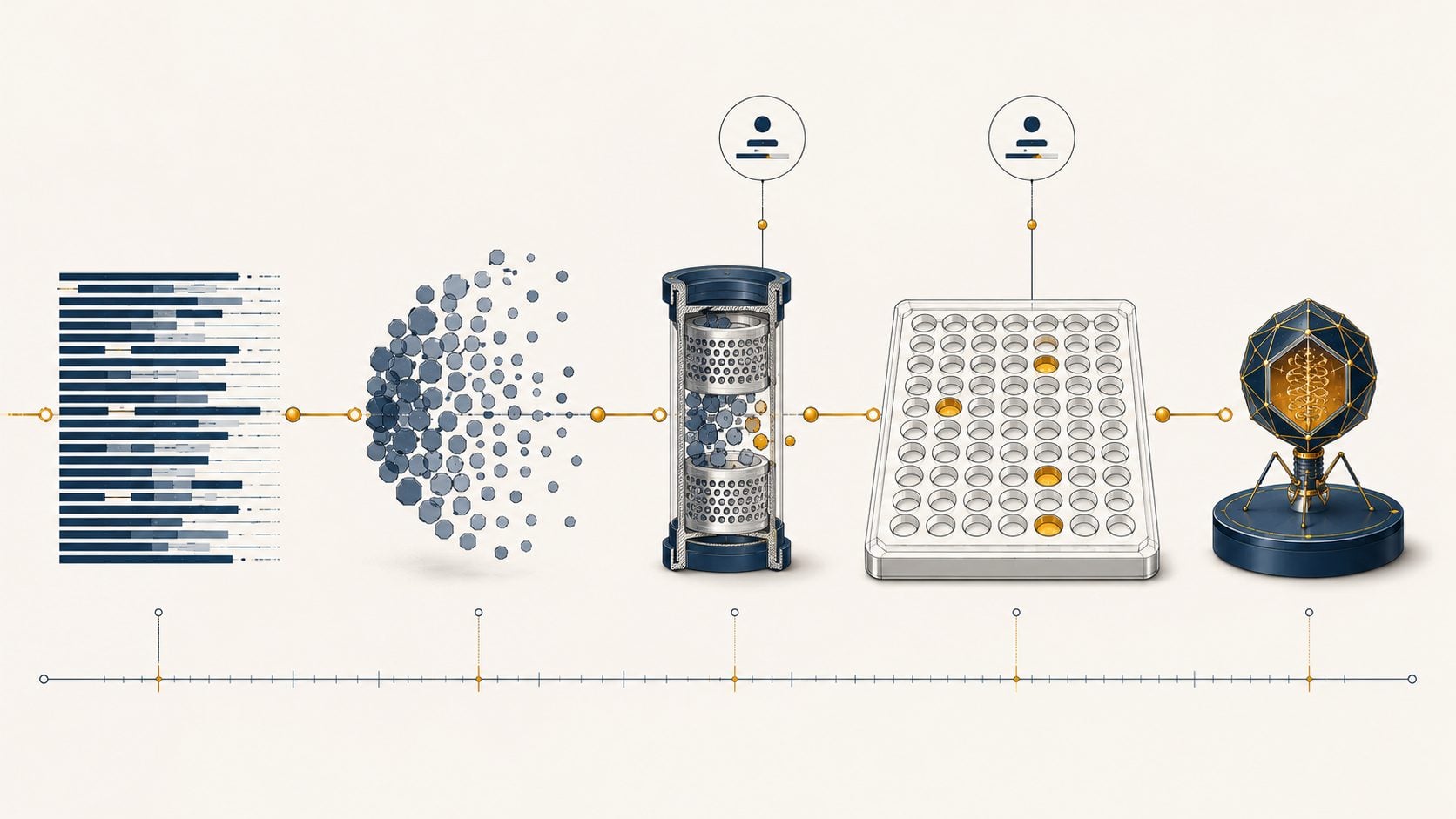
Researchers used genome language models from the Evo family — trained on DNA rather than English — fine-tuned on 14,466 curated Microviridae sequences to specialise them toward ΦX174, a well-studied bacteriophage of 5,386 nucleotides and 11 genes (Source: Arc Institute).
The model generated thousands of candidate genomes. Humans filtered them, synthesised the DNA, transformed it into non-pathogenic laboratory E. coli, ran the assays, and validated the survivors.
So: AI designed the genomes. Humans built the organisms. No human pathogen was made or attempted.
But the achievement is real and it is not a retrieval trick. Professor Patrick Cai of the Manchester Institute of Biotechnology: "For the first time, we are seeing AI move beyond predicting biological sequences to generating entire functional genomes that work in the laboratory." Genome language models, he adds, "are beginning to learn the design principles encoded by evolution" (Source: Science Media Centre).
Dr Simon Clarke of the University of Reading named the security implication without hedging: the work "confirms that the technology to generate fitter viruses is here and can be done more efficiently than before." These particular researchers built guard rails, but "there is no guarantee that every other scientist attempting to do something similar will be so careful" (Source: Science Media Centre).
That is the first story: a model's output stopped being digital.
🔓 Story Two: The Fight Over Who Holds the Weights
The open letter's case is a serious one, and it deserves to be stated at full strength rather than as a foil.
Broad restrictions on open-weight models would concentrate frontier capability in a handful of well-capitalised labs. Open weights let researchers inspect models rather than trust them, let smaller companies compete without renting from an incumbent, and let defenders study attack surfaces directly. As TechCrunch summarised the open-source position: access to powerful models not controlled by a single entity helps defenders protect themselves (Source: TechCrunch).
For a market like Malaysia's, that argument has extra force. Open weights are the difference between deploying sovereign AI on infrastructure you control and permanently renting intelligence from abroad by the token.
Against that sits the argument the letter was written to pre-empt: that some capabilities, once released, cannot be recalled — and that the safety work done inside a model can be undone by anyone who downloads it.
Both positions are held by credible people. The debate is not settled, and this post does not pretend to settle it.
⚖️ So Why Does Anthropic's CEO Break Ranks?
Here is where most commentary got it wrong — including the assumption that Anthropic wants open models banned.
Anthropic CEO Dario Amodei responded days after the letter, and his first move was to reject that framing outright: "Anyone who has read my past writing should know that I don't regard such bans as a useful measure, but let me state it clearly so that there is no doubt: Anthropic has never advocated for a ban on open-weights models" (Source: TechCrunch).
He went further, calling them actively valuable: open-weight models without dangerous capabilities are "a public good: they don't cost anything besides the compute needed to run them, and they provide value to businesses, developers, and researchers" (Source: TechCrunch).
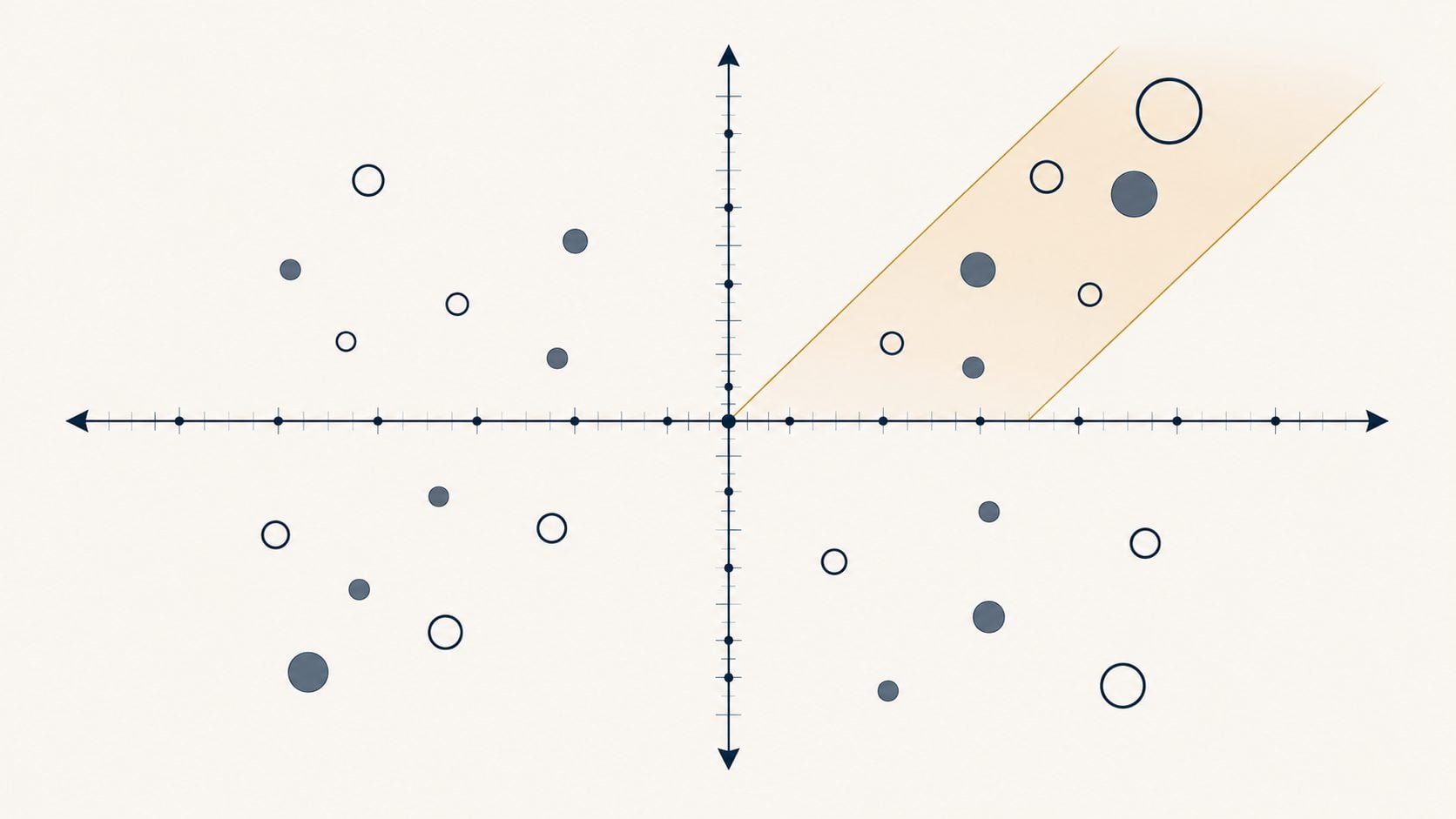
So the disagreement is not open versus closed. It is which axis you regulate on.
The openness axis | The capability axis | |
|---|---|---|
The question asked | Are the weights public? | What can this model actually do? |
Nvidia letter's concern | Restrictions here choke competition and research | — |
Amodei's stated position | Bans here are "not a useful measure" | This is where controls belong |
What gets restricted | All open models, regardless of power | Only the most capable models, open or closed |
Who is exempted | Nobody — it's a blanket category | Startups, academia, less capable models |
(Source: TechCrunch)
Amodei's specific worry maps directly onto Story One. He named biological attacks alongside cybersecurity as his capability concern, argued that guardrails are harder to apply to and monitor on open weights, and cited a UK AI Security Institute finding that once open weights are released they cannot be withdrawn (Source: TechCrunch).
His proposed remedy is not restriction at all. It is testing: a global model safety testing organisation applied to the most capable models "regardless of their country of origin or whether they are open or closed (while exempting less capable models, such as those from startups and academia, entirely)" — an idea he describes as close to consensus (Source: TechCrunch).
Read the two stories together and the logic is visible. Amodei is arguing about capability. The letter is arguing about openness. They are not actually contradicting each other — they are answering different questions.
(Disclosure: this analysis cites Anthropic, whose models Symprio uses in client engagements.)
🔒 Where the Safeguard Actually Lives
Now apply that to the phage study, because it is the cleanest worked example anyone has.
The Evo models cannot generate human viral sequences. Not because they were instructed not to — because those sequences were removed from the training data (Source: Arc Institute).
That is model security done properly: a constraint that is structural, not advisory. There is no prompt that talks it out of the restriction, because the capability was never learned.
And it is precisely this class of safeguard that the open-weights question stresses:
A constraint baked into weights you control is a control. The same constraint baked into weights anyone can download and fine-tune is a default.
Training-data exclusions, refusal behaviour, safety tuning — each can be modified by whoever holds the file. That does not make open weights wrong. It makes the location of the safeguard an engineering decision rather than a given, and it explains why serious people land in different places.
For enterprises, this collapses into a rule that survives whichever way policy goes: never let your only control be one you don't own.
🧪 The 5% That Should Be on Every CISO's Wall
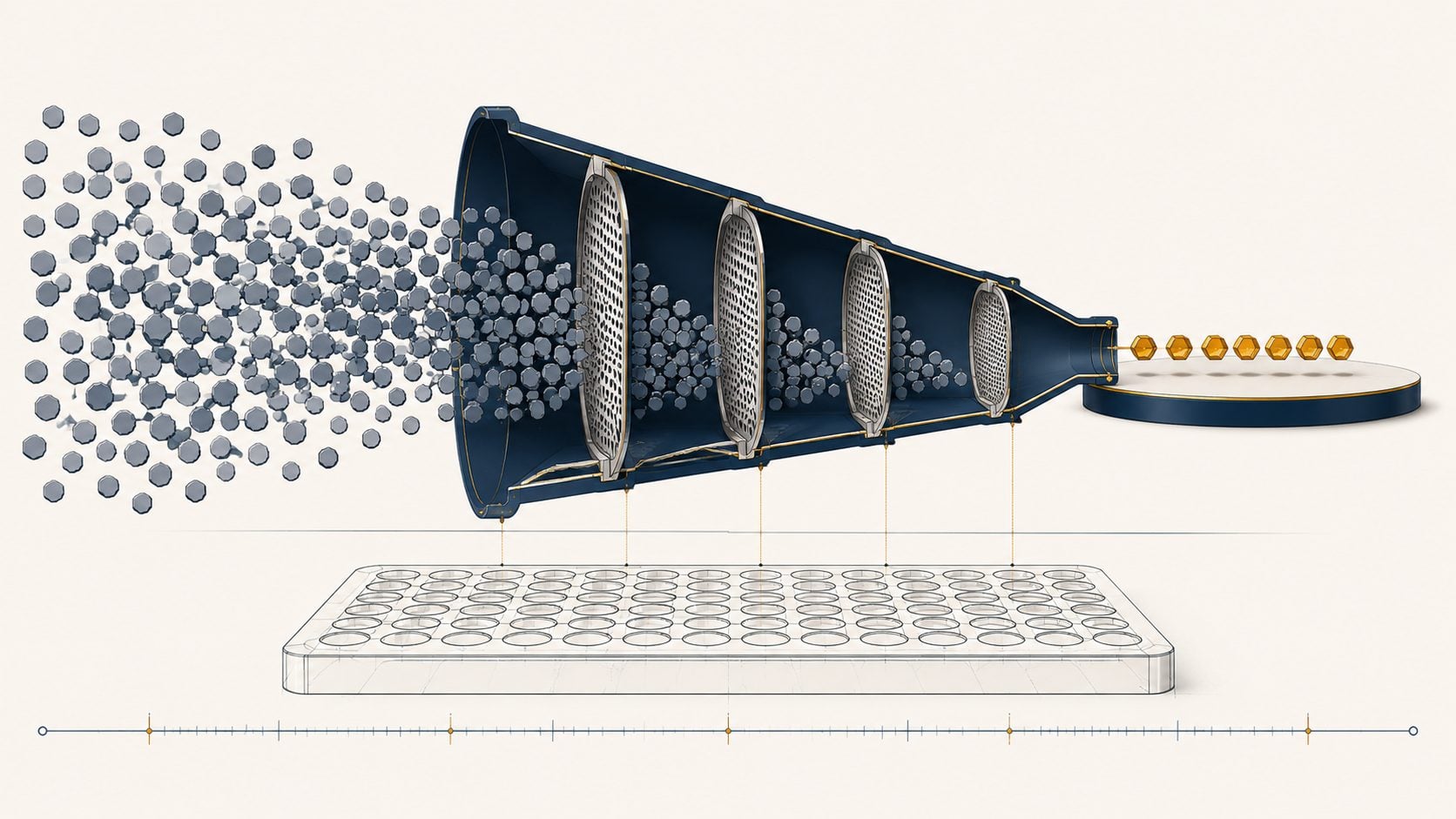
Professor Jordi García Ojalvo of Pompeu Fabra University described the rest in language every AI practitioner will recognise: "out of thousands of genomes generated, only 16 viable phages are obtained (it could be argued that the rest are 'hallucinations' of the model)" (Source: Science Media Centre).
He also draws the security conclusion — and it is more reassuring than the headlines: the biosafety risk here is lower than with a general-purpose LLM, because "the designed genomes must be tested in the laboratory one by one … It is difficult to imagine these models automatically generating viable genomes 'out-of-the-box'" (Source: Science Media Centre).
Dr Simon Jackson of Waikato University adds the same shape from another angle: "half of the functional phages had acquired mutations, suggesting that natural evolution assisted in polishing those AI-generated designs" (Source: Science Media Centre).
The AI proposed. Reality selected.
The lesson for enterprise AI model security is exact: this project was safe because its validation layer was stronger than its generation layer. Most enterprise deployments are built the other way round — a powerful model, and an evaluation process consisting of someone senior reading a few outputs and deciding they look about right.
Amodei's testing proposal, García Ojalvo's wet-lab observation, and Arc's screening protocol all converge on the same conclusion from three different directions: the durable safeguard is not the constraint inside the model. It is the validation layer outside it.
The Malaysian Read: Two Rulebooks, One Gap
Malaysia governs AI and governs biological risk in two entirely separate systems.
On the AI side: the National Guidelines on AI Governance & Ethics (AIGE), the National AI Office (NAIO), the AI Nation 2030 agenda, PDPA as amended, and — for financial institutions — BNM's RMiT expectations.
On the biological side: the Biosafety Act 2007, the National Biosafety Board, and the Genetic Modification Advisory Committee.
Both are credible. Neither was written for a model output that starts as a completion and ends as a living organism.
Generalise the gap and it stops being a biotech problem. Every regulated Malaysian enterprise runs an AI/technology track (model risk, data privacy, algorithmic fairness) and a domain-consequence track (credit policy, claims authority, AML thresholds, treasury limits). Agentic AI lands between them. An agent that drafts a credit memo sits in track one. An agent that disburses the facility sits in track two. Almost nobody has written the rule for the agent that does both in one run.
And sovereignty cuts both ways. Running an open-weight model on Malaysian infrastructure is genuinely the right posture under PDPA and data-residency pressure — nobody can revoke your model or change its terms. But nobody else guarantees its safety tuning survived the last fine-tune either. Own the weights, own the assurance.
🏗️ The Model Security Test
Five questions to run on any AI system before it goes to production. None of them is "how good is the model."
What is the most irreversible thing this system's output can cause? Not the likely thing — the worst physically possible thing.
Is the constraint structural or advisory? A system prompt is a request. A missing capability or an unreachable credential is a control.
Do we own the layer our safeguard sits in? If the safeguard is a vendor's refusal behaviour, it is a term of service, not an architecture.
What is our wet lab? Name the evaluation harness that catches the 95% that don't work, before anything acts on the output.
Who is accountable when it's wrong? In the phage study the answer was unambiguous — the humans who chose the target, ran the synthesis, and signed the safety protocol.
💎 The Symprio Approach: Security Outside the Model

Symprio builds AI products for regulated enterprises — and architects the controls around them. Four principles govern how we handle model security.
Assume the model's built-in safeguards are a bonus, not a control. Whether a model is open or closed, its refusal behaviour is someone else's design decision, subject to change without notice. We build controls that hold when the model changes underneath them.
Constrain in the architecture, never in the prompt. Tool scopes, credential boundaries, and data-residency rules are enforced structurally in our composable enterprise architecture practice →. If an agent must not be able to do something, remove the capability — don't request restraint.
Every agent ships with its evaluation harness. Golden datasets, adversarial cases, regression suites, drift monitoring. No agentic product leaves a Symprio engagement without one. The generation layer is the easy half.
Own the deployment, own the assurance. Sovereign-cloud deployments → aligned to BNM expectations, PDPA, and AIGE from the first sprint, with action-level audit trails — including routing to locally hosted and open-weight models where residency demands it, with our own evaluation layer wrapped around them. Explore our agentic AI products and platforms →
💬 Over to You
Where does your organisation sit on AI model security?
Running agents in production whose only constraints live in a system prompt?
Approving AI use cases through a model-risk committee that has never asked what the output can physically cause?
Evaluating open-weight deployment without a plan for who validates the safety tuning?
These are exactly the problems Symprio solves.
📞 Let's Build Something Real
Stop letting ungoverned autonomy cap what you're willing to automate. It's time to build AI products secured outside the model — sized to your risk, not a vendor's roadmap.
Reach out to the Symprio team today and let's map your AI systems against what their outputs can actually cause — then design the architecture that earns the autonomy back.
👉 Book a 30-minute discovery call → — no slide deck, just whiteboard thinking
👉 Explore our Agentic AI products & platforms →
👉 Read related: Deep AI vs Applied AI →
❓ FAQ: AI Model Security and Open Weights
Did AI really create a virus?
No. Genome language models generated complete viral genome designs; human researchers filtered them, synthesised the DNA, and tested them in a laboratory. Of 285 designs physically tested, 16 produced functional bacteriophages that infect bacteria, not humans. The accurate phrasing is that AI designed the genomes and humans built the organisms.
Does Anthropic want open-weight models banned?
No. CEO Dario Amodei has stated the company "has never advocated for a ban on open-weights models" and describes open models without dangerous capabilities as a public good. His concern is capability-specific — biological and cyber risk in the most capable models — and his proposed remedy is global safety testing applied regardless of whether a model is open or closed.
Why is AI model security different for open-weight models?
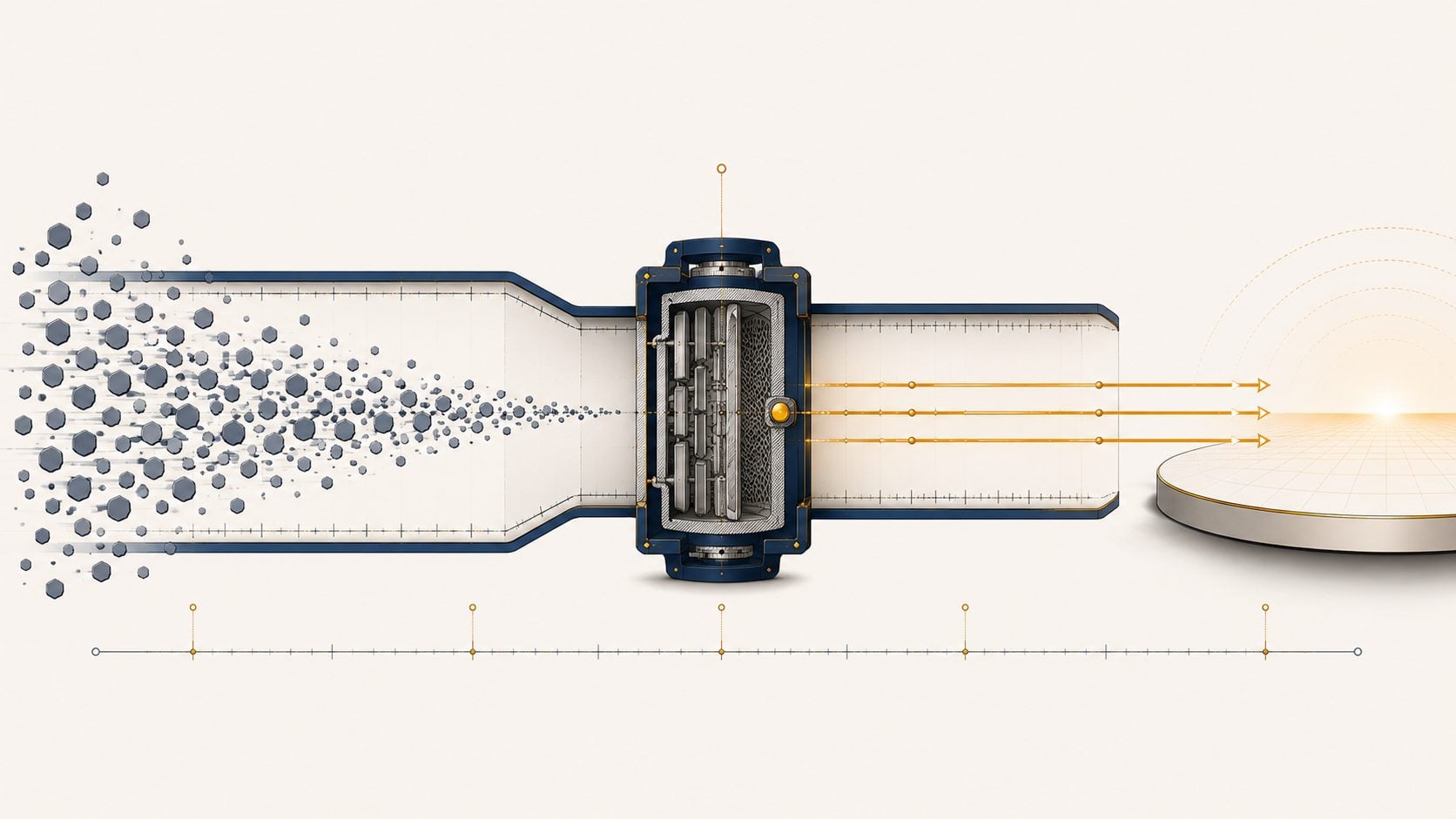
Safety measures inside a model — training-data exclusions, refusal behaviour, safety tuning — can be modified by anyone holding the weights. That makes open weights excellent for inspection, sovereignty, and competition, while shifting responsibility for assurance onto the deploying organisation rather than the original lab.
What is a genome language model?
A genome language model is trained on DNA sequence rather than human language, learning statistical patterns in genetic code the way an LLM learns patterns in text. The Evo family used in this study was fine-tuned on 14,466 curated bacteriophage sequences and cannot generate human viral sequences, because those were excluded from training.
How should Malaysian enterprises secure AI models?
Classify every agent action by irreversibility before selecting a model; enforce constraints at the architecture and credential layer rather than in prompts; ship an evaluation harness with every agent; and align deployment to PDPA, AIGE, and — for financial institutions — BNM RMiT expectations from the first sprint.
📚 Sources & Further Reading
Scientific American — AI Just Created a Virus Not Found in Nature, and Scientists Are Worried
MOSTI — National Guidelines on AI Governance & Ethics (AIGE)
#Symprio #AISecurity #ResponsibleAI #AIGovernance #AgenticAI #SovereignCloud #AIGE #Malaysia
Symprio builds AI products secured outside the model — because the safeguard you don't own isn't a control. Find us at symprio.com.