The audio edition couldn't be loaded right now — the written post below has everything.
AI-powered development speeds up how you build. AI-enabled products change what you sell. Why the difference decides your AI returns — a Symprio analysis.
In this analysis: The two bets defined · What the data says · Why boards mix them up · Governance in Malaysia · The Symprio approach · FAQ
🚨 Pop Quiz Time — For Every Board Member Reading This
In 2026, two Malaysian companies stand before their boards and say the same sentence: "We are now an AI company."
A) Company A's engineers use Copilot, Cursor and Claude Code daily. Releases ship noticeably faster. Delivery costs are falling.
B) Company B has a credit pre-screening agent in production — a product its customers interact with directly, every day.
Which claim survives due diligence?
If your answer was "those aren't even the same claim" — you're ahead of most boardrooms. Because the numbers tell an uncomfortable story:
84% of developers now use or plan to use AI coding tools — yet only 29% trust the output (Source: Stack Overflow 2025, via Uvik)
88% of organisations use AI in at least one business function — yet only 39% can point to any EBIT impact (Source: McKinsey)
Malaysian business AI adoption grew 35% year-on-year, with roughly 2.4 million businesses now using AI in some form (Source: US-ASEAN Business Council)
Adoption is everywhere. Returns are rare. And a surprising share of that gap traces back to one under-examined confusion: the difference between AI-powered development and AI-enabled products. They sound interchangeable. They are entirely different bets — with different economics, different risks, and different answers to the only question a board actually cares about.
What Separates AI-Powered Development from AI-Enabled Products
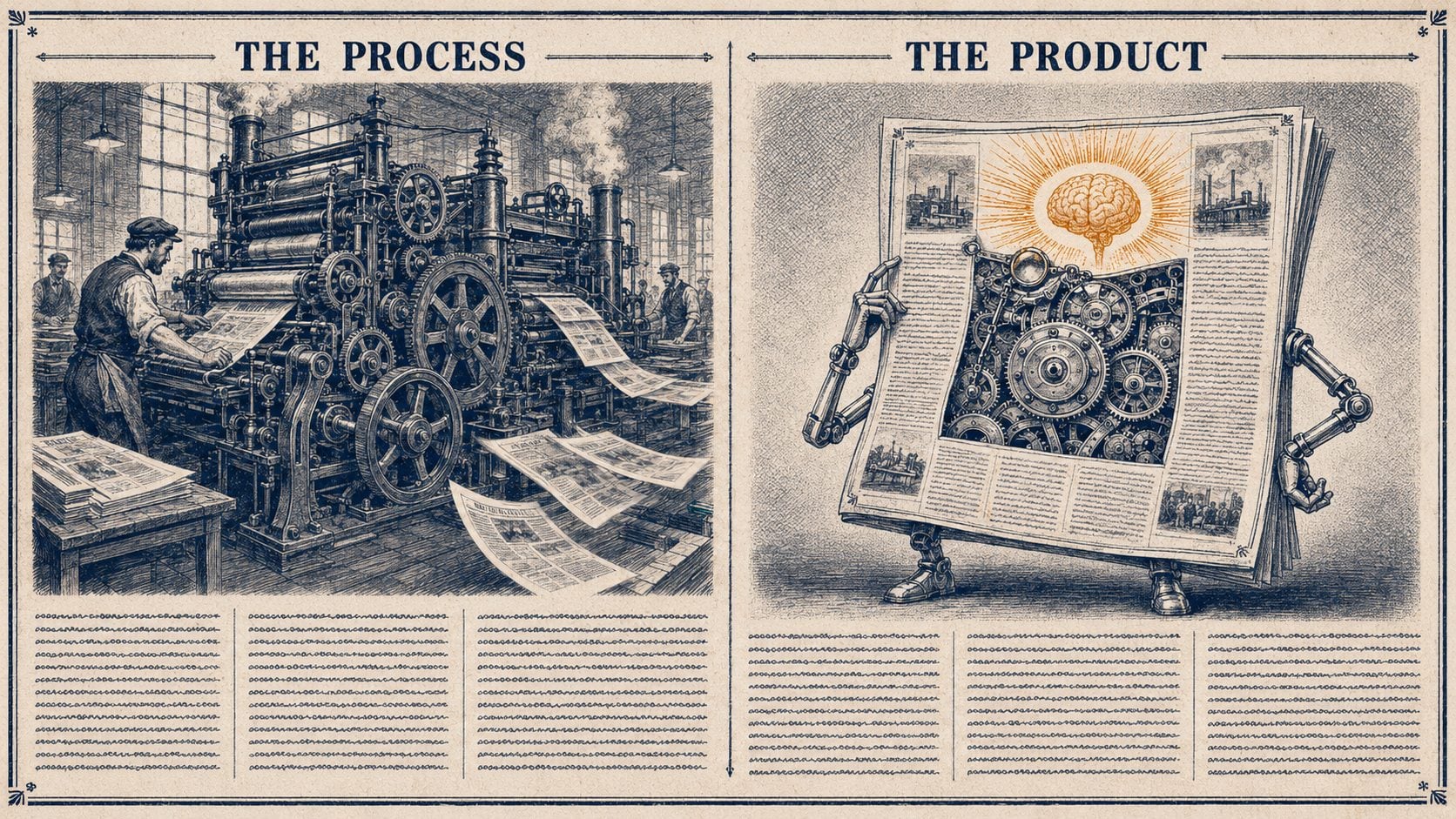
AI-powered development puts AI in your process. Tools like Cursor, Claude Code, GitHub Copilot and Lovable sit inside the engineering workflow — generating, refactoring and testing code at machine speed. The output is still conventional software: a portal, an API, a mobile app. Your customer never meets the model. The AI clocks out before the product ships.
An AI-enabled product puts AI in the thing you sell. The intelligence is the functionality — an underwriting agent that pre-screens SME loan applications, a claims co-pilot that reads accident photos, a knowledge assistant trained on your operations manuals. Your customer interacts with the model directly, and the product's value collapses without it.
The cleanest litmus test we know: unplug the model tomorrow. If your engineers slow down, you have AI-powered development. If your product stops working, you have an AI-enabled product.
Dimension | AI-powered development | AI-enabled product |
|---|---|---|
Where the AI lives | Inside your engineering process | Inside the thing your customer uses |
What it optimises | Cost, speed, delivery throughput | Revenue, differentiation, retention |
Who notices | Your CTO and your finance team | Your customers and your competitors |
How value shows up | Velocity metrics, lower delivery cost | P&L lines, market share |
Primary risk | Code quality, security debt, IP leakage | Model behaviour, compliance, customer harm |
Neither is superior. But they answer different questions — and the data behind each tells a very different story.
The Data Tells Two Different Stories

Put the two categories side by side and the pattern is hard to miss: both are scaling fast, and both carry an asterisk that rarely makes the board deck.
Signal | AI in the process | AI in the product |
|---|---|---|
Adoption today | 84% of developers use or plan to use AI coding tools | 88% of organisations use AI in at least one function |
Trajectory | 90% of enterprise engineers on AI assistants by 2028, up from under 14% in early 2024 | Global AI software spend rising from US$283 billion to US$453 billion in 2026 |
The asterisk | Only 29% of developers trust the output | Only 39% of organisations report any EBIT impact |
(Sources: Uvik / Stack Overflow 2025; Hostinger / Gartner; Gartner; McKinsey)
On the development side, the story is efficiency with a trust problem. A 2025 METR randomised controlled trial found experienced developers were actually 19% slower with AI tools — while believing they had been 20% faster (Source: Saner.ai). SonarSource's developer survey found 96% of developers don't fully trust AI-generated code to be functionally correct, yet under half consistently check it before committing (Source: Exceeds.ai). Speed is real; unverified speed is deferred cost.
On the product side, the story is value with an execution gap. MIT's Project NANDA found 95% of enterprise generative AI pilots produced no measurable P&L impact (Source: Saner.ai) — and McKinsey's high performers, the roughly 6% attributing more than 5% of EBIT to AI, got there by redesigning workflows around narrow, production-grade deployments rather than stacking pilots (Source: McKinsey). Gartner, even while placing AI in its Trough of Disillusionment, still forecasts worldwide AI spending of US$2.59 trillion in 2026 — up 47% — and calls 2026 the inflection year for enterprise spending (Sources: Gartner, Jan 2026; Gartner, May 2026).
Translation for the boardroom: process AI is becoming table stakes. Product AI is where the moat gets dug — by the few who ship past the pilot.
Why Boards Keep Mixing Them Up
The confusion is understandable: both categories produce the same slide. "We're using AI" fits either story, and in most 2026 board packs, the two are blended into a single line item labelled AI initiatives.
But they answer different board questions. AI-powered development answers "are we efficient?" — it lives on the cost line, and its benefits accrue quietly inside engineering dashboards. AI-enabled products answer "are we differentiated?" — they live on the revenue line, in front of customers, where competitors can see them and regulators can question them.
There's a second reason the blend is dangerous. Gartner notes that through 2026, AI will most often reach enterprises through their incumbent software vendors rather than as deliberately chosen projects (Source: Gartner). In plain English: the AI features arriving inside your existing SaaS stack are arriving inside your competitor's stack too. Rented intelligence produces parity, not advantage. Differentiation has to be built — as a product, deliberately, on top of your own data and workflows. Explore Symprio's build-not-buy perspective →
Different Risk, Different Governance — Especially in Malaysia

The two bets also carry entirely different compliance profiles — a distinction that matters more in Malaysia in 2026 than almost anywhere else in the region.
Development-time risk is an engineering problem. Gartner names insecure suggested code and sensitive data leakage as the top two risks of AI coding assistants (Source: Axis Intelligence). These are governed by discipline you already understand: review gates, provenance tracking, security scanning, and test coverage that doesn't bend to deadline pressure. A Malaysian bank can adopt Copilot quietly under its existing SDLC controls.
Product-time risk is a regulatory conversation. Put an AI agent into a customer loan journey and you are now operating inside PDPA obligations, Bank Negara Malaysia's expectations for financial institutions, MOSTI's AI Governance and Ethics (AIGE) guidelines, and the direction set by the National AI Action Plan 2026–2030 coordinated by the National AI Office (Sources: NAIO; US-ASEAN Business Council). Model behaviour, explainability, data residency and human oversight stop being engineering preferences and become board-level, regulator-visible commitments.
Neither checklist is optional. But running an AI-enabled product on a development-tool governance mindset is how enterprises end up explaining themselves to a regulator. The lesson is not that product AI is riskier than it's worth — the lesson is that it deserves its own architecture.
The Symprio Approach: Build the Product, Keep the Discipline
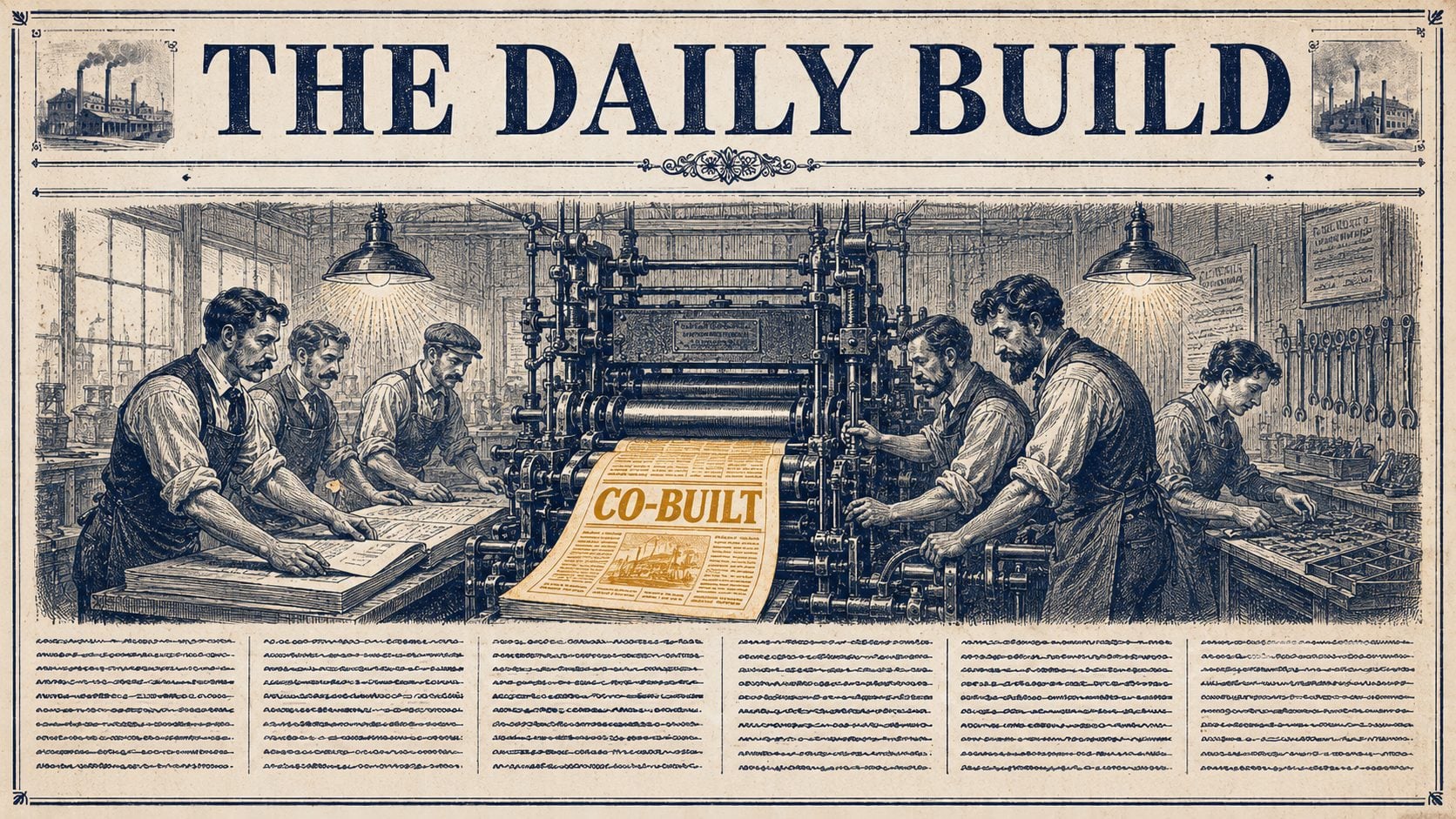
Symprio sits deliberately on both sides of this divide: we use AI-powered development to ship AI-enabled products. We are a product engineering practice, not a consultancy with opinions — and four principles guide how the two bets combine.
Machine speed, engineering discipline. Our vibe coding practice runs on Cursor, Claude Code, Lovable and Bolt — wrapped in enterprise-grade architecture, review gates and code provenance. The METR and SonarSource findings above are exactly why: velocity without verification is not productivity, it's deferred liability. See our vibe coding-led product engineering →
Products, not pilots. The 39% EBIT statistic is mostly a scoping failure. We build narrow agentic products that own one workflow end-to-end — and report against a named P&L line from the first sprint, not after a year of experimentation. Explore our agentic AI products →
Governance as architecture, not paperwork. Sovereign-cloud deployments aligned to BNM, PDPA and AIGE from day one — controls designed in, never audited in afterwards. For regulated Malaysian enterprises, this is the difference between a product that launches and a pilot that stalls in review.
Co-build and transfer. Our adopt-and-build model pairs Symprio engineers with your team to build the first product together, then transfers the architecture and certifies your people to operate it. The moat ends up owned by you — not rented from us.
What This Looks Like in Practice
Within 90 days of engagement, Malaysian enterprise teams typically see deployments such as:
An SME onboarding and credit pre-screening agent that compresses application review from days to minutes.
A motor claims intake co-pilot that reads documents and photos before an adjuster ever opens the file.
An AML/fraud investigation acceleration agent that assembles case evidence instead of leaving analysts to hunt for it.
A finance reconciliation agent that closes the month roughly five days faster.
An internal knowledge assistant trained on operations manuals and SOPs, answering with citations.
These are not moonshots. Each one is an AI-enabled product — and each one is built with AI-powered development. That is the whole point.
The Verdict: It Was Never Either/Or
The question is not which bet to make — it's whether you know which bet each ringgit is making. By 2028, Gartner expects 90% of enterprise engineers to work with AI assistants (Source: Hostinger / Gartner); process efficiency will be table stakes you rent, not an edge you own. Differentiation will belong to the enterprises that used the machine-speed process to ship the differentiated product — governed properly, scoped narrowly, and live in front of customers while competitors are still piloting.
Engaging with Symprio

Symprio engages with enterprise leaders in three formats:
Discovery workshop (half-day, complimentary). A working session with your senior team to identify the highest-leverage AI-enabled product opportunity in your operating model.
Pilot engagement (8–12 weeks). Co-build the first product to production, including architecture transfer and team enablement.
Long-term partnership. Embedded capacity to build a portfolio of products over a 12–24 month horizon.
Book a discovery call → · Share a brief; receive an architecture sketch within 48 hours →
Frequently Asked Questions
What is an AI-enabled product?
An AI-enabled product is software whose core functionality depends on an AI model — such as an underwriting agent, claims co-pilot or knowledge assistant. The customer interacts with the intelligence directly, and the product stops working if the model is removed.
What is AI-powered development?
AI-powered development means using AI tools such as Cursor, Claude Code or GitHub Copilot inside the software engineering process. The AI accelerates how software is built, but the finished product itself contains no AI and customers never interact with the model.
Can a company pursue both at the same time?
Yes — and the strongest position is using both deliberately: AI-powered development to build at machine speed, applied to shipping AI-enabled products that differentiate the business. The two require separate governance, budgeting and success metrics to avoid blending cost savings with revenue creation.
Do AI-enabled products face more regulation in Malaysia?
Generally yes. Customer-facing AI products fall under PDPA obligations, Bank Negara Malaysia's expectations for financial institutions, and MOSTI's AIGE guidelines, with national direction set by the National AI Action Plan 2026–2030. Development tools are governed mainly by internal engineering and security controls.
Sources & Further Reading
McKinsey — The State of AI in 2025: Agents, Innovation, and Transformation
Gartner — Forecasts Worldwide AI Spending to Grow 47% in 2026
Gartner — Worldwide AI Platforms and Models Market to Grow 63% in 2026
Gartner — Worldwide AI Spending Will Total $2.5 Trillion in 2026
Hostinger — Vibe Coding Statistics 2026 (Gartner adoption forecasts)
Uvik Software — AI Coding Assistant Statistics 2026 (Stack Overflow 2025 data)
Saner.ai — AI Assistant Statistics 2026 (METR 2025 RCT; MIT Project NANDA)
Exceeds.ai — AI Coding Assistant Adoption Rates 2026 (SonarSource survey)
Axis Intelligence — AI Coding Assistant Statistics 2026 (Gartner risk analysis)
US-ASEAN Business Council — Malaysia Accelerates National AI Agenda
Chambers & Partners — Artificial Intelligence 2025: Malaysia Trends
#Symprio #BuildNotBuy #EnterpriseAI #AIProducts #VibeCoding #AgenticAI #Malaysia
Symprio builds AI-enabled products for Malaysian and Southeast Asian enterprises — at machine speed, with engineering discipline.