The audio edition couldn't be loaded right now — the written post below has everything.
GPT-6 Astra and Claude Fable 5.1 both cost $10/$50. ILMU costs RM4/RM16. We ran a real Malaysian agentic workload through all three — here's the bill.
💸 Two Labs. Same Week. Identical Price Tag.
This is not a post about which model is smarter.
Every benchmark table on the internet will tell you that. Nobody is short of benchmark tables.
This is a post about the invoice.
Because something quietly remarkable happened in the first week of September 2026. On 1 September, Anthropic shipped Claude Fable 5.1 at US$10 per million input tokens and US$50 per million output (Source: Anthropic). On 3 September, OpenAI shipped GPT-6 Astra at — wait for it — US$10 per million input tokens and US$50 per million output (Source: OpenAI).
Two labs. Two continents. Two entirely different architectures. One identical number.
Meanwhile, roughly 15,000 kilometres from both of them, ILMU v3.1 sits on YTL AI Labs' console at RM4.00 input and RM16.00 output (Source: ILMU Console).
At today's rate of about RM4.04 to the dollar, that's roughly US$0.99 and US$3.96.
So: same work, ten times the price, depending on which console you log into.
Which is either an outrage or an opportunity, and the honest answer is that it depends entirely on the workload. Let's do the maths properly — in ringgit, with SST, on a real job.
🏷️ The Sticker Price, All In One Place
Here is the current top of the market, converted at RM4.04 = US$1 (Source: Investing.com). Ringgit figures for the US models are indicative — you'll actually be billed in dollars.
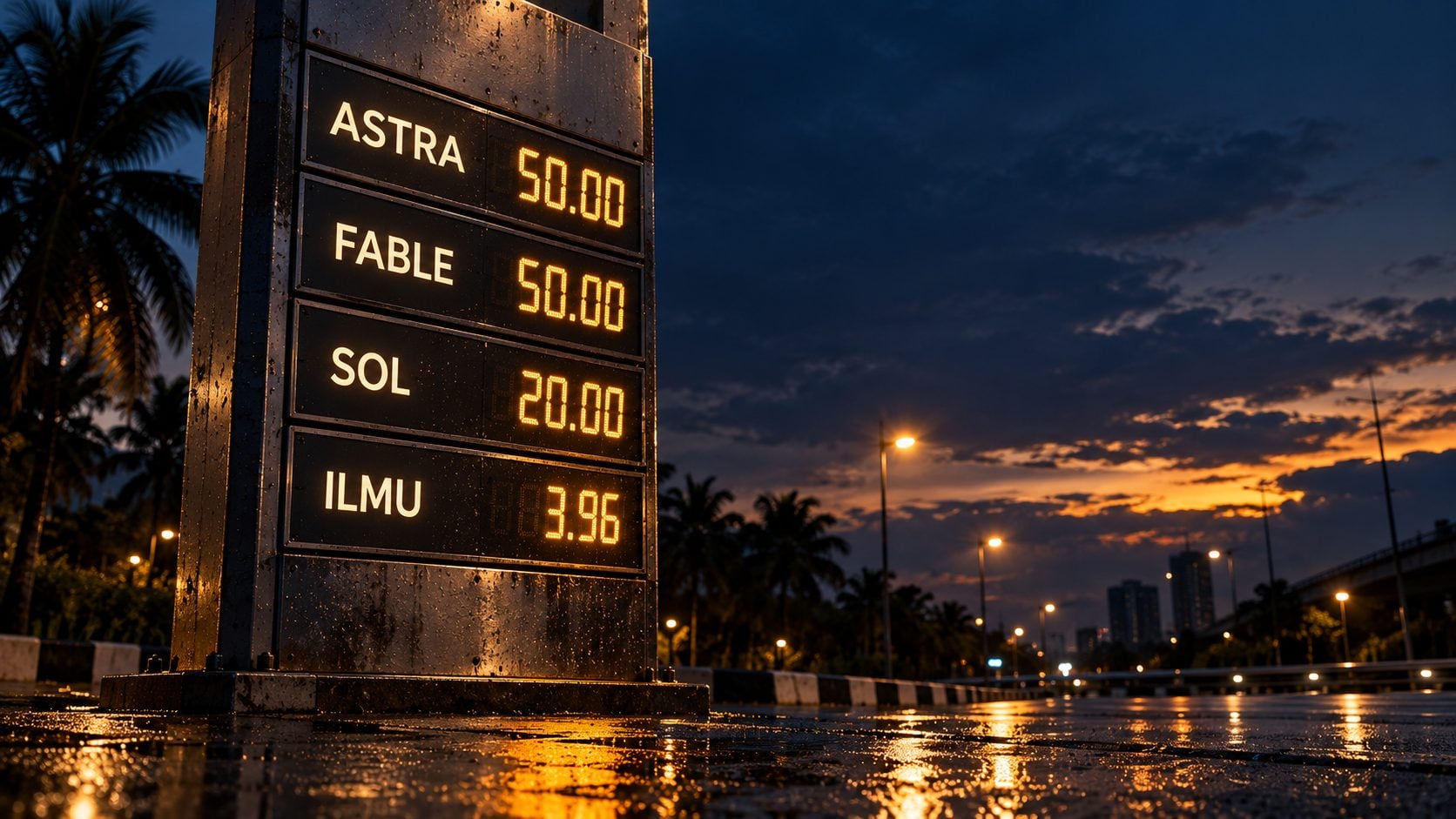
Model | Input /1M | Cached input /1M | Output /1M | In ringgit (in / out) |
|---|---|---|---|---|
GPT-6 Astra (OpenAI) | $10.00 | $1.00 | $50.00 | ~RM40 / RM202 |
Claude Fable 5.1 (Anthropic) | $10.00 | $0.25 | $50.00 | ~RM40 / RM202 |
Claude Opus 5 | $5.00 | $0.50 | $25.00 | ~RM20 / RM101 |
GPT-5.6 Sol | $4.00 | $0.40 | $20.00 | ~RM16 / RM81 |
Claude Sonnet 5 | $2.00 | $0.20 | $10.00 | ~RM8 / RM40 |
GPT-5.6 Terra | $2.00 | — | $12.00 | ~RM8 / RM48 |
ILMU v3.1 (YTL AI Labs) | RM4.00 | RM0.40 | RM16.00 | RM4 / RM16 |
GPT-5.6 Luna | $0.20 | — | $1.20 | ~RM0.81 / RM4.85 |
ILMU Mini v3.3 | RM0.20 | RM0.02 | RM1.20 | RM0.20 / RM1.20 |
(Sources: OpenAI; Anthropic; Claude Platform pricing; ILMU Console; CellCog)
Three things jump out of that table before you've done a single calculation.
One. The frontier has a ceiling, and both labs found it independently. When two competitors arrive at the same number in the same week, that's not a coincidence — that's a market discovering what the top tier is worth.
Two. ILMU v3.1 sits almost exactly where GPT-5.6 Sol sits on output, and below Sonnet 5 on input. It is not a budget curiosity. It is priced like a serious mid-tier model, because that is what it is.
Three. ILMU Mini v3.3 at RM0.20 input is roughly 200 times cheaper than Astra or Fable 5.1 on the same axis. Two hundred. That is not a discount; that is a different category of spending.
Now Convert It Properly — Including the Bits Nobody Converts

Here's where most Malaysian AI budgets go quietly wrong: the finance team converts the sticker price and stops.
Three lines get missed.
SST at 8%. ILMU applies 8% Sales & Service Tax to all paid plans and pay-as-you-go usage, effective 1 June 2026 (Source: ILMU Console). Published rates are before tax. It's a small line, but it's a known line — build it in.
Foreign exchange, which is not a small line. Over the trailing 52 weeks the ringgit has moved between 3.8805 and 4.232 to the dollar (Source: Pluang). That's a swing of about 9%. If your entire AI stack is billed in USD, you are carrying a nine-percent volatility band on a line item that finance thinks is fixed — and that band is wider than any enterprise discount you're likely to negotiate. ILMU bills in ringgit. That is not a rounding-error advantage; that is hedging you get for free.
Data residency, which is a cost when you don't have it. ILMU advertises 100% Malaysian data residency and no training on customer data (Source: ILMU Console). Anthropic offers US-only inference for Fable 5.1 at a 1.1× multiplier on input and output (Source: Anthropic); OpenAI lists a 10% regional-processing uplift for eligible recent models (Source: BenchLM). Note the direction of travel: at the frontier, residency is a surcharge. Locally, it's the default.
For a BNM-regulated institution weighing RMiT and PDPA obligations, that last line is not a footnote. It's often the whole conversation.
🧾 The Real Bill: One Workload, Four Vendors
Sticker prices are abstract. Let's run something real.
Take a document-heavy agentic workload of the kind Malaysian BFSI teams actually deploy — a claims intake or internal knowledge agent that pulls a large stable context on every run:
200,000 input tokens per task — of which 150,000 are cached (the SOPs, schemas and policy wording that never change) and 50,000 are fresh
15,000 output tokens per task
10,000 tasks per month
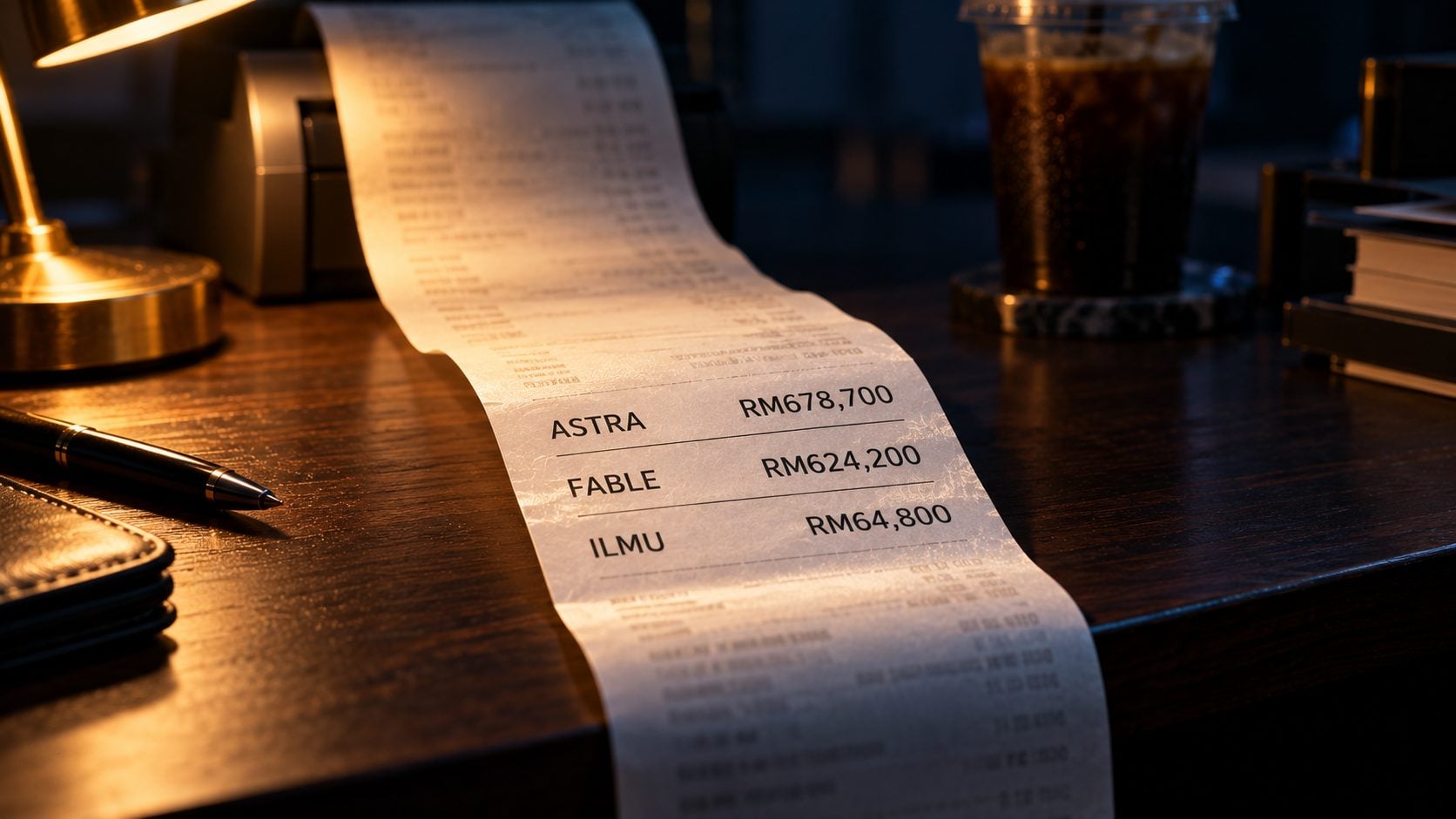
Model | Cost per task | Per month | Per year (RM) |
|---|---|---|---|
GPT-6 Astra | $1.40 | $14,000 (~RM56,560) | ~RM678,700 |
Claude Fable 5.1 | $1.2875 | $12,875 (~RM52,015) | ~RM624,200 |
GPT-5.6 Sol | $0.56 | $5,600 (~RM22,624) | ~RM271,500 |
ILMU v3.1 | RM0.50 | RM5,000 (+SST = RM5,400) | ~RM64,800 |
ILMU Mini v3.3 | RM0.031 | RM310 (+SST = RM335) | ~RM4,000 |
Calculated by Symprio from published vendor rates; converted at RM4.04 = US$1. ILMU figures include 8% SST; USD figures exclude any FX spread.
The gap between the top row and the ILMU v3.1 row is roughly RM614,000 a year.
In Kuala Lumpur, that is two senior engineers. Or the entire build budget for the product the agent is supposed to be part of.
And notice the row nobody puts on the slide: ILMU Mini at RM4,000 a year. If a meaningful slice of those 10,000 monthly tasks is classification, extraction, routing or summarisation — and in most real deployments, it is — that slice does not belong anywhere near a fifty-dollar output token.
🔍 The Fine Print That Quietly Eats Budgets

Now the fun part, because the sticker price is the least interesting number on any of these price cards.
The cache column is the actual price war. Astra charges $1.00 per million cached input tokens. Fable 5.1 charges $0.25 — a 75% cut from Fable 5, priced at 2.5% of the base input rate where every other Claude model charges 10% (Source: Claude Platform pricing). Anthropic estimates that single change cuts typical workloads about 25%, and cache-heavy agentic ones by up to roughly 45% (Source: VentureBeat). Identical headline price, 4× difference on the line that agentic systems hit hardest. ILMU, for its part, prices cached input at one tenth of input — RM0.40 — and applies it automatically, with nothing to enable.
The tokenizer tax. Here's the reversal. Anthropic's recent models use a tokenizer that reportedly produces roughly 30% more tokens for the same text than older models (Source: CalculateQuick). Re-run our workload with 30% more tokens and Fable 5.1's monthly bill climbs from $12,875 to about $16,700 — overtaking Astra. The model with the cheaper cache becomes the more expensive model, and no rate card told you.
The long-context cliff. Astra prompts over 272,000 input tokens are billed at 2× input and 1.5× output for the entire request (Source: OpenAI). Not for the excess — for the whole thing. One agent that grows its context window across a long run can double its own bill mid-task.
Speed costs double. Fast mode on Astra is 2× the applicable rate (Source: OpenAI). Batch and Flex are 50% on both platforms — which means the cheapest optimisation available to you is usually patience.
Tools bill separately. Fable 5.1's web search runs $10 per 1,000 searches on top of tokens (Source: VentureBeat). ILMU charges RM0.04 per search, and the results still count as input tokens on the follow-up call (Source: ILMU Console).
And ILMU has its own trap. On monthly Claw plans, unused tokens are forfeited at the end of each billing cycle — only one-off top-up packs carry a 12-month life (Source: ILMU Console). Nemo-Super consumes 3× the tokens of Nemo-Nano for the same allocation. Cheap tokens you didn't use are still 100% waste.
Every one of these lives below the headline. Every one of them moves a real bill by double digits.
⚖️ So Is ILMU Just… Cheaper? (An Honest Answer)
No. It's cheaper and different, and pretending otherwise would be the same laziness as pretending price doesn't matter.
What the frontier is genuinely buying you. Astra is built for long-horizon autonomous work — computer use, multi-step software operation, security and science (Source: OpenAI). Fable 5.1 is positioned for long-running projects that fix root causes rather than symptoms (Source: Anthropic). If your agent runs for four hours unsupervised and one wrong decision costs more than the whole month's tokens, the fifty-dollar output rate is not the expensive part. Cheap tokens that fail the task are infinitely expensive.
What ILMU is genuinely buying you. Malaysian data residency by default. Ringgit billing with no FX exposure. Bahasa Melayu, English and Chinese handled natively. An OpenAI-compatible /v1/chat/completions endpoint, so switching is a base-URL change, not a rewrite (Source: ILMU Console). And an ecosystem programme offering eligible companies up to US$1 million in ILMU tokens over 12 months (Source: YTL AI Labs) — which, against our worked example above, is a great many years of running an agent for free.
The uncomfortable middle. Most enterprise AI work is not frontier work. It is reading a document, extracting six fields, checking them against a policy, and writing four sentences. Routing that to a model priced for autonomous software engineering is not a capability decision. It's an unexamined default with a six-figure annual price tag.
The right question was never "which model is best." It's "what is the cheapest model that completes this specific task reliably?" — asked once per task type, not once per company.
🎚️ The Routing Ladder
Every AI product Symprio ships gets a routing table before it gets a model. Roughly, for a Malaysian enterprise stack:
Classification, extraction, routing, tagging, embeddings. ILMU Mini v3.3 or BGE-M3 at RM0.04 per million. This is the highest-volume tier and it should cost almost nothing.
Malay-language, culturally-grounded, or residency-bound work. ILMU v3.1. Not a compromise — for Bahasa Melayu and PDPA-sensitive workloads it is the better answer, and it happens to be cheaper.
General reasoning, drafting, mid-complexity agents. Sonnet 5, Terra, or Sol depending on your existing contracts.
Long-horizon autonomous agents, hard multi-step engineering, high-stakes single decisions. Astra or Fable 5.1 — deliberately, for the 5–10% of traffic that earns it.
Get the top tier down to a tenth of your calls and the frontier premium stops being a budget problem. Leave everything on the default and it becomes your largest software line item within two quarters.
💎 The Symprio Approach: Architecture Before Rate Card
Symprio builds AI products for Malaysian enterprises — and we're deliberate about cost architecture from the first sprint, not the first invoice. Four principles guide it.
Route by task, never by vendor. We don't build single-model products. Every workflow gets a routing table with a measured fallback path, so a price change at any lab is a config edit rather than a migration project. Vendor lock-in is a cost you pay later, in full.
Design the cache before writing the prompt. When cache reads range from $1.00 to RM0.40 across the market, prompt structure is cost engineering. Stable context at the front, volatile context at the back, measured hit rates in production — that's where the 45% lives.
Price in ringgit, budget for the fine print. SST, FX bands, long-context cliffs, forfeited monthly allocations, per-search tool fees. We model the bill your CFO will actually receive, then design against it — through our AI development and product engineering practice →.
Sovereign where it matters, frontier where it earns it. Deployments aligned to BNM RMiT, PDPA and AIGE from day one, routed to locally hosted models where residency demands it — and to the frontier only where the task genuinely justifies a fifty-dollar output token. Both, deliberately. Not one by default.
💬 Over to You
Where does your organisation sit on this curve?
Running everything through one frontier model because that's what the pilot used?
Billing an entire AI stack in USD with no hedge and no line item for it?
Sitting on Malaysian-language or residency-bound workloads that a sovereign model would handle better and cheaper?
Unable to answer "what does one completed task cost us?" without opening a spreadsheet nobody maintains?
These are exactly the problems Symprio solves.
📞 Let's Build Something Real
Stop letting default routing set your AI budget. It's time to build AI products priced in ringgit and architected for choice — sized to your workloads, not to a launch-day headline.
Reach out to the Symprio team today and let's put a real per-task number on your AI stack — then design the routing that halves it.
👉 Explore our AI development & product engineering services →
👉 Book a 30-minute call → — no slide deck, just whiteboard thinking
👉 Read related: Your AI Pilot Was the Cheap Part →
👉 Read related: Deep AI vs Applied AI →

❓ FAQ: AI API Pricing in Ringgit
How much does GPT-6 Astra cost?
GPT-6 Astra is priced at US$10 per million input tokens, US$1 per million cached input tokens, and US$50 per million output tokens on standard processing. Batch and Flex run at 50% of those rates, Fast mode at 200%, and prompts over 272,000 input tokens are billed at 2× input and 1.5× output for the entire request.
How much does Claude Fable 5.1 cost?
Claude Fable 5.1 is US$10 per million input tokens and US$50 per million output — identical to Astra on the headline. The difference is cached input at US$0.25 per million, one quarter of Astra's rate. Batch processing halves both base rates to US$5 and US$25.
How much does the ILMU API cost?
On pay-as-you-go, ILMU v3.1 costs RM4.00 per million input tokens, RM0.40 cached, and RM16.00 per million output. ILMU Mini v3.3 is RM0.20 / RM1.20. Monthly ILMU Claw seats start at RM25. All prices are before 8% SST, and enterprise pricing is available on request.
Is ILMU actually cheaper than GPT-6 Astra or Claude Fable 5.1?
On raw token rates, roughly ten times cheaper on input and twelve times cheaper on output. On a realistic cache-heavy agentic workload, our worked example puts ILMU v3.1 at around RM65,000 a year against roughly RM679,000 for Astra. Whether that translates into a lower real cost depends on task completion rates — a cheap model that fails the task costs more than an expensive one that doesn't.
How should a Malaysian enterprise decide which AI model to use?
Route by task, not by vendor. Send high-volume classification, extraction and embedding work to the cheapest capable model; send Malay-language and residency-bound workloads to a sovereign model like ILMU; reserve frontier models such as Astra or Fable 5.1 for long-horizon autonomous work. Budget in ringgit, and include SST, FX volatility, and long-context surcharges.
📚 Sources & Further Reading
OpenAI — Advancing the Price-Performance Frontier with GPT-5.6
VentureBeat — Claude Fable 5.1 and Mythos 5.1 Arrive with a 75% Cost Reduction for Fable Cache Reads
CellCog — GPT-5.6 Pricing: What Sol, Terra and Luna Cost After the Cuts
#Symprio #EnterpriseAI #AgenticAI #SovereignCloud #AIStrategy #BuildNotBuy #Malaysia
Symprio builds AI products priced for the bill your CFO actually receives. Find us at symprio.com.