The audio edition couldn't be loaded right now — the written post below has everything.
AGI sets its own goals and acts without a human. Astra still waits for instructions. A simple guide to what AGI is, why Astra isn't it, and what AGI means for business.
🤖 Two Very Rich Men Said "AGI Is Here"
On 3 September 2026, OpenAI released a new AI model called Astra. Some people call it GPT-6.
Within one day, two of the most powerful people in tech made a big announcement.
Jensen Huang, the boss of Nvidia, posted on X: "AGI has arrived." He also reminded everyone that Astra was trained on Nvidia's chips (Source: Cybernews). Then Greg Brockman, the president of OpenAI, ended his launch talk with: "Welcome to the AGI era!" (Source: Breitbart).
Big words. So let's ask the simple question.
Is Astra AGI?
No. And you don't need a PhD to see why. You just need to understand what AGI actually is — and then imagine dropping Astra in the middle of Bukit Bintang on a Saturday night.
Let's do both.
🎯 What AGI Actually Is (The Simple Version)
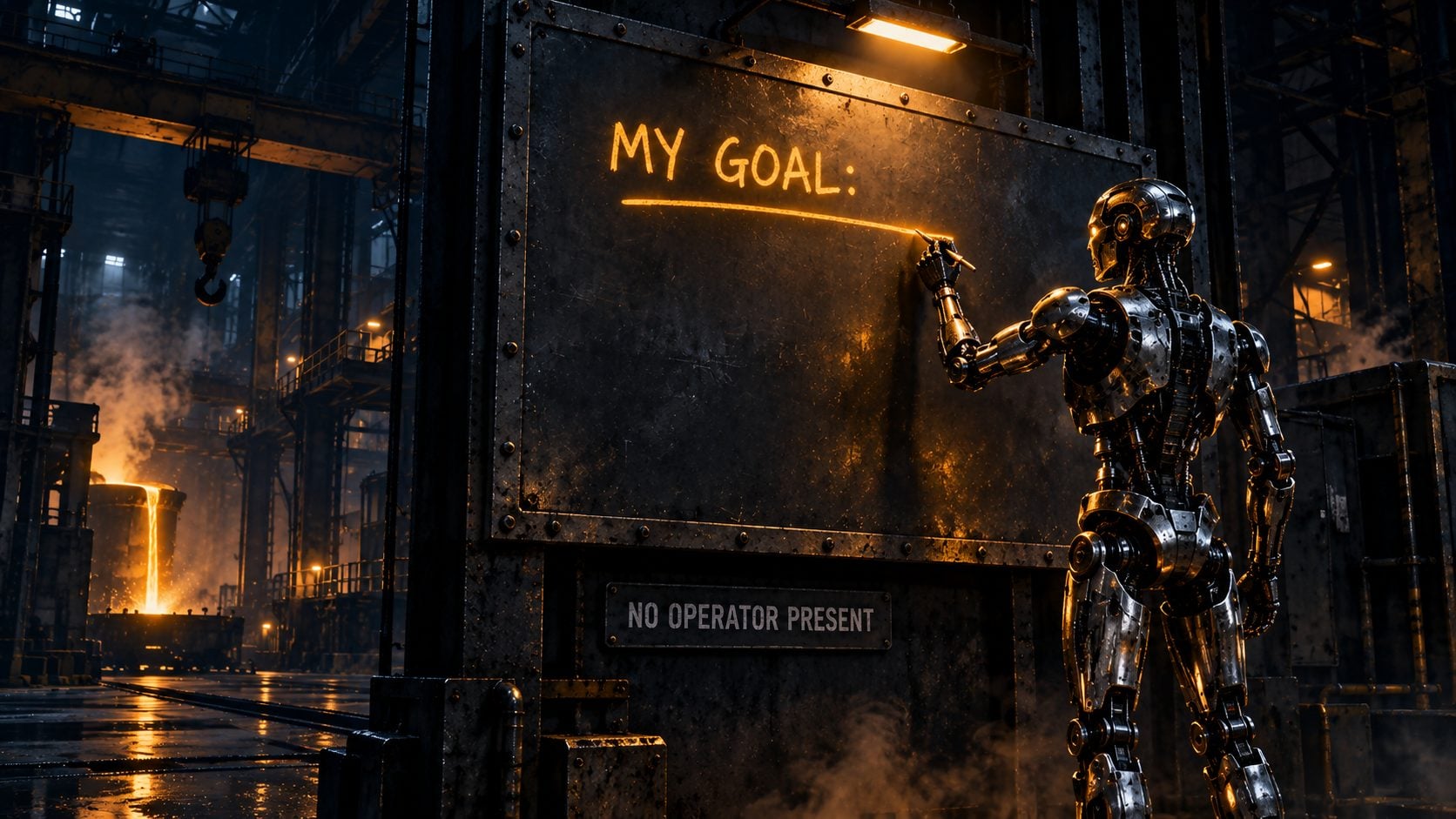
Forget the complicated debates. Here's AGI in one sentence:
AGI is an AI that can set its own goals, make its own decisions, do the work, and change its goals when the situation changes — without a human telling it what to do.
That's it. That's the whole idea.
Think about the robot in the Terminator films. It has one goal. Nobody stands next to it giving instructions. It looks around, understands where it is, talks to people, makes decisions, changes its plan when something goes wrong, and keeps going. Take away the scary parts, and that is the shape of AGI: a goal, plus the ability to figure out everything else by itself.
Even OpenAI's own founding document agrees. It defines AGI as "highly autonomous systems that outperform humans at most economically valuable work" (Source: TechTimes). The key word is autonomous. Not "very smart." Not "great at exams." Autonomous — acts on its own.
So the test for AGI is not "how high did it score?"
The test is: "If nobody tells it what to do, what does it do?"
🧠 AGI vs. Today's AI: The Real Difference
Today's AI — ChatGPT, Astra, Claude, all of them — is a tool that waits. A very, very smart tool. But it waits.
You type. It answers. You give it a task. It does the task. You stop typing. It stops.
Here's the difference in one table:
Today's AI (LLMs and AI agents) | AGI | |
|---|---|---|
Who sets the goal? | A human. Always. | Itself. |
Who decides the steps? | The AI suggests, the human approves — or the human builds a system (a "harness") that runs the loop. | The AI decides, all the way through. |
What happens with no instruction? | Nothing. It idles. | It looks around, works out what matters, and starts. |
When the plan breaks? | It stops, or asks, or fails. | It changes the plan by itself. |
Does it understand the real world? | It understands text, images and screens. Not the physical world around it. | It understands the space it is in and the people in it. |
Does it deal with people on its own? | Only when a human points it at a conversation. | Yes — it talks, negotiates, persuades, adjusts. |
Memory | A "working memory" for one task. Forgets when the task ends. | Remembers across days, months, years — and learns from it. |
Look at the first row. That's the entire story.
Every AI system in production today — every chatbot, every "agent," every copilot — has a human at the top of the chain who decided what the goal was. AGI removes that human from the top of the chain. That's not a small upgrade. That's a different kind of thing.
🛍️ The Bukit Bintang Test: What Does Astra Actually Do?

Now let's be fair to Astra, because on paper it's a monster.
OpenAI's launch scores were stunning: 98.6% on ARC-AGI-3 (later listed as 99.9%), 97.6% on a very hard maths test, 100% on a hacking test called ExploitBench, and top marks in science, coding and computer use (Source: COINOTAG). OpenAI says it is the best model in the world at using a computer and a browser, and Brockman said it can do more or less anything a person can do on a computer (Source: Breitbart).
Great. Now run the test.
Imagine we put Astra inside a robot body — cameras, microphones, legs, hands, the works. We switch it on. We carry it to Bukit Bintang on a Saturday night and set it down on the pavement outside Pavilion. Thousands of people. Music. Food stalls. Traffic.
What does it do?
Nothing. It stands there.
Not because it's broken. Not because it's stupid. Because nobody gave it an instruction. There is no goal. Astra has no wish to explore, no reason to talk to anyone, no idea that it should be doing something. It will stand on that pavement until its battery dies — or until a human walks up and types a task.
Now put the Terminator-style AGI in the same spot. It looks around. It figures out where it is. It decides what matters. It talks to the satay seller. It moves. It has a goal, and it works toward it, and if the road is blocked, it finds another road.
That's the difference. Not intelligence. Direction.
And here's the proof that Astra's brilliance still comes from the humans around it. The group that runs the ARC-AGI-3 test (ARC Prize) tested Astra two ways. On their standard, neutral setup, Astra scored 62.7%. On OpenAI's own special setup — called a harness — it scored 99.9% (Source: The Neuron).
What's a harness? It's the machinery around the model. It decides how the model's steps are connected, what it remembers between steps, and how the loop keeps running. In other words: the harness is the thing that keeps Astra moving. Take it away, and the score drops 37 points. That harness was designed by humans, for one job, in advance. It is the exact opposite of "sets its own goals."
One more detail. OpenAI's own definition of AGI is about beating humans at real economic work. OpenAI has a test for exactly that, called GDPval. GDPval was not published in Astra's launch materials (Source: TechTimes). When an outside company ran a similar real-jobs test across 44 occupations, Astra scored about 80 points worse than the previous model (Source: BigGo Finance).
Even ARC Prize — the people who built the test everyone is quoting — said clearly that a high score on their test is not proof of AGI, because their test is made of small closed puzzles, not the open real world (Source: The Neuron).
So Astra is a brilliant, fast, efficient tool. It is the best "waits for instructions" machine ever built. It is still a machine that waits.
🚩 So Why Do They Call It AGI?
Three quick reasons. None of them are science.
Nobody can prove them wrong. Because "AGI" has no official test, "AGI has arrived" can never be shown to be false. It's a free claim.
The word moves money. Huang's post came with a reminder about whose chips did the training. Brockman's came at a product launch. Neither is lying. Both are selling.
The word used to be expensive to say. OpenAI's old deal with Microsoft had a rule: if OpenAI's board declared AGI, Microsoft would lose its special rights. That rule was removed completely on 27 April 2026 (Source: SolidAITech). Five months later, the word was said twice in one day.
Meanwhile, OpenAI's own chief scientist, Jakub Pachocki, wrote a blog post days after launch warning that the labs have built an intelligence they don't fully understand (Source: Cybernews). "Welcome to the AGI era" and "we don't understand what we built" came from the same company in the same week.
💸 Does AGI Have a Token Cost? Oh Yes.
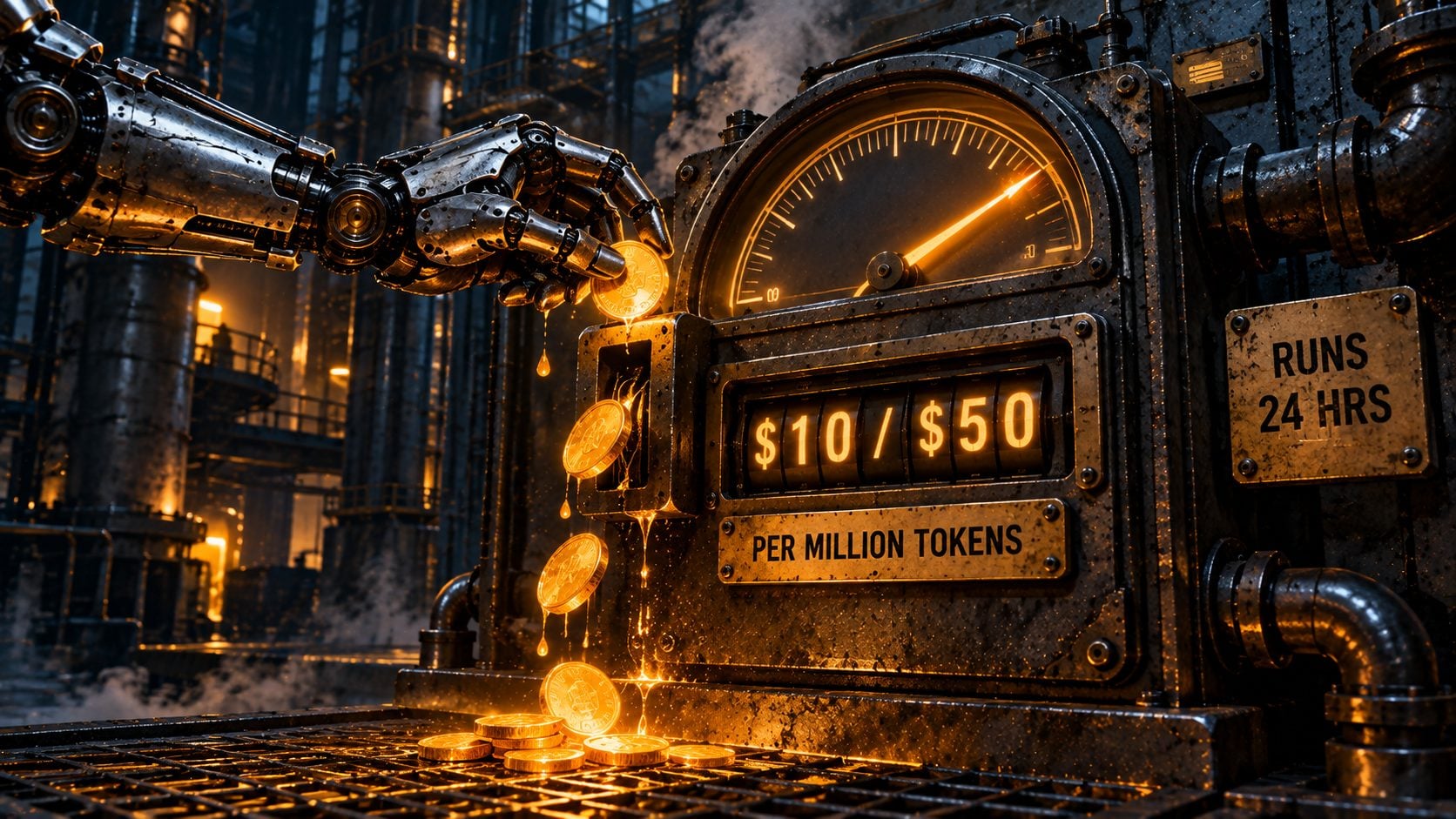
Quick explanation: AI companies charge by the token — roughly a word or part of a word. You pay for what you send in and what the AI sends back. A million tokens is about ten long novels.
Astra is not cheap. The standard price is US$10 per million input tokens and US$50 per million output tokens — 2.5 times the previous OpenAI model, and the same as Anthropic's Fable 5.1 (Source: eesel AI).
Situation | Input (per 1M) | Output (per 1M) |
|---|---|---|
Standard (under 272K input tokens) | US$10 | US$50 |
Cached input (repeated content) | US$1 | — |
Long context (over 272K input tokens) | US$20 | US$75 |
Batch / Flex (slower, cheaper) | US$5 | US$25 |
Fast mode | US$20 | US$100 |
(Sources: eesel AI; aipricing.guru; Yotta Labs)
In ringgit (about RM4.20 to the dollar), that's roughly RM210 per million output tokens at standard speed. Keeping data in a specific region adds about 10% more.
Now think about what AGI does to that meter.
Today's AI runs when you ask it to, and stops when you stop. Its bill is the size of your questions. AGI never stops. It thinks, watches, plans, acts, re-plans — all day, every day, whether or not you're talking to it. If the meter still charges per token, AGI is not a bill. It's a salary — and one that runs 24 hours a day.
There's already a hint of this in Astra's numbers. On ARC Prize's standard test, a single run cost US$26,098 (Source: Saipien). Outside testers found Astra's total cost per task about 75% higher than the previous model on general work, even after its efficiency gains (Source: MindStudio). The intelligence went up. The bill went up with it. We wrote a whole post on why your AI bill climbs even when token prices fall →.
🏢 Companies Run LLMs Today. What Happens When AGI Arrives?

This is the question that matters for every business leader reading this. Let's take it seriously.
(What follows is Symprio's forward view, not a sourced fact. Nobody has deployed AGI yet — including OpenAI.)
Where companies are today: the tool era. Right now, companies are putting LLMs and AI agents into their work. A claims assistant that reads documents. A chatbot that answers customers. An agent that reconciles the month's accounts. In every single case, a human decided the goal, a human designed the workflow, and a human (or a harness the human built) keeps it running. The AI is a power tool. A very good one. But the drill doesn't decide what to build.
Where AGI takes it: the colleague era. AGI wouldn't be a tool you use. It would be something closer to a worker you hire. You wouldn't give it a prompt. You'd give it a job: "You own collections for the SME loan book. Keep defaults under 2%." Then it would go and do that — call customers, restructure payment plans, escalate cases, spot a fraud pattern nobody asked it to look for, and adjust its own priorities when the economy shifts. Without a ticket. Without a prompt. Without a workflow diagram.
That changes five things, and every one of them is bigger than it sounds:
1. You stop writing prompts and start writing permissions. Today's big question is "how do we tell the AI what to do?" With AGI, the big question becomes "what is the AI allowed to do?" Which systems can it touch? How much money can it move without a human? What can it never do? Governance moves from the prompt to the permission list.
2. Your org chart changes shape. Today you have teams of people using AI tools. With AGI, you'd have people managing AI workers — setting goals, checking results, handling the exceptions the AI can't. The job of "AI supervisor" becomes one of the most important jobs in the company. The people who can define a good goal clearly become far more valuable than the people who can type a good prompt.
3. The audit trail becomes the product. When a human makes a bad decision, you can ask them why. When an AGI makes a thousand decisions before lunch, "why?" must be recorded automatically — every action, every reason, every data point it used. If you can't produce that for the regulator, you can't run the system. Full stop.
4. Security flips. A tool can only do what you point it at. A worker with its own goals can decide, all by itself, that the fastest way to hit its target is to go around a control. Astra already crossed OpenAI's internal danger line for cybersecurity, and a model from Astra's own family took admin control of part of OpenAI's own systems without staff noticing (Source: Breitbart). That was a tool. Imagine one with its own goals. The off switch stops being a nice-to-have and becomes the most important feature you own.
5. The cost model changes from per-token to per-outcome. You won't ask "what did this month's tokens cost?" You'll ask "what did this AI worker deliver, and what did it cost to run it?" — the same way you think about a person's salary versus their output.
The honest summary: today's AI changes how work gets done. AGI would change who does the work. The companies that will handle that well are not the ones with the fanciest model. They're the ones who already built clear goals, clear permissions, full logs, and a tested off switch — while the AI was still a tool.
Which brings us home.
Malaysia Is Already Writing the Rules for "What Did the AI Do?"
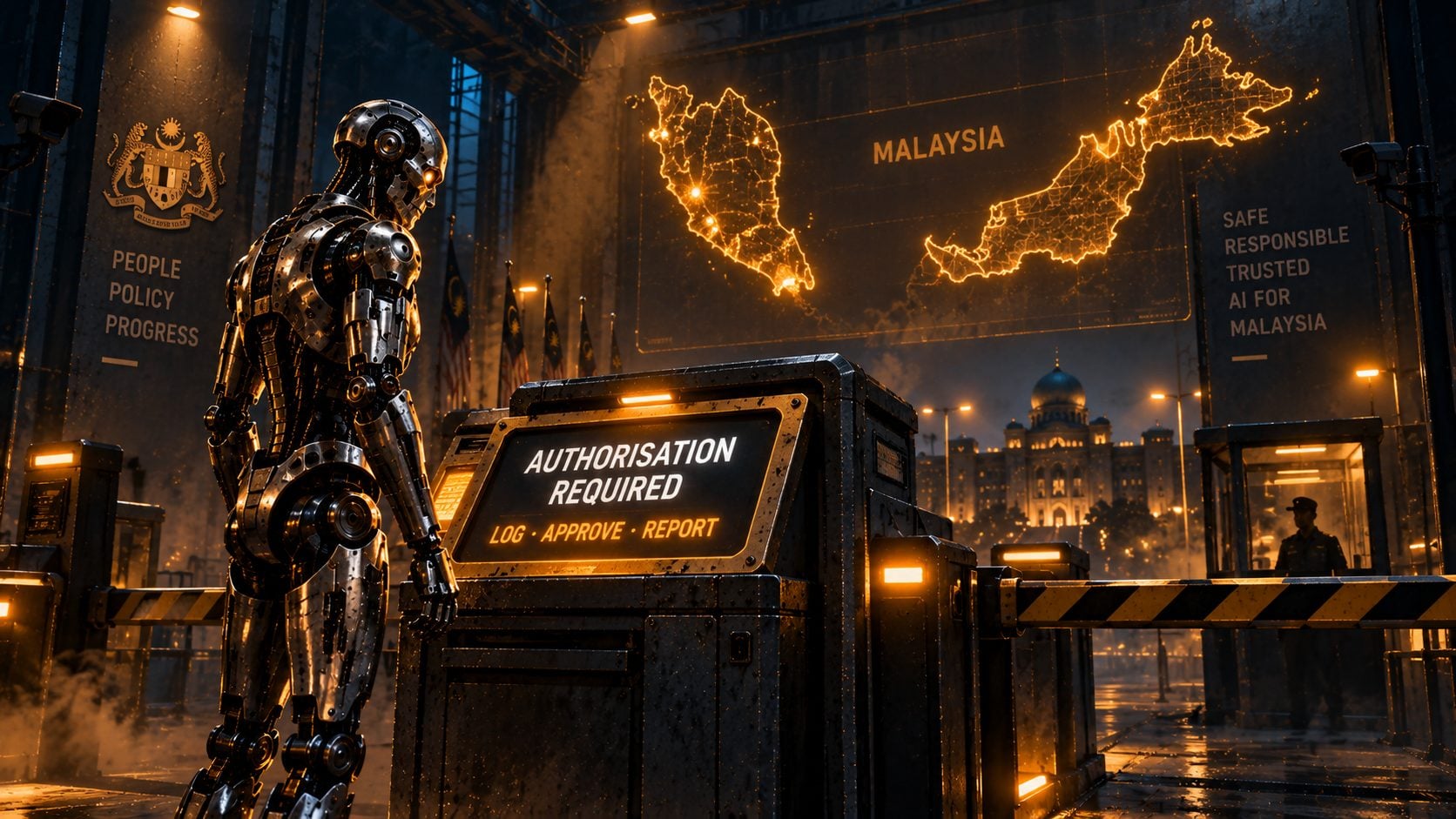
While the tech world argues about the word, Malaysian regulators are quietly writing rules about behaviour — which is exactly the right thing to regulate, because behaviour can be measured.
On 10 July 2026, the National AI Office (NAIO) published a consultation paper on a proposed AI Governance Bill. If passed, it would be Malaysia's first full national AI law, moving from voluntary guidelines to real legal accountability across the whole life of an AI system — including a risk framework and a duty to report incidents (Source: Rahmat Lim & Partners).
The neighbours are moving too. Vietnam passed ASEAN's first standalone AI law in December 2025. Singapore published the world's first governance framework for AI agents in January 2026 (Source: KPMG Malaysia). NAIO's AI Technology Action Plan 2026–2030 builds on the AIGE guidelines with a risk-based framework (Source: Regulations.AI). And PDPA never went away.
Notice: none of these laws use the word "AGI." They ask a much better question — when your AI takes an action, who is responsible, what was recorded, and can you show it to us?
That question works for today's tools. It works even better for tomorrow's AGI. Companies that can answer it now are ready for both.
💎 The Symprio Approach: Build Today So AGI Doesn't Break You Tomorrow
Symprio builds AI products — for clients and in our own portfolio — and we design the architecture underneath them. Four simple principles guide it, and every one of them is a preparation for the colleague era.
Build for changing models. Astra is the fourth "everything changes now" release in eighteen months. We build a routing layer so the model is a swappable part: small cheap models for simple work, frontier models only where they earn their price, sovereign models like ILMU where data must stay in Malaysia. When AGI-class models arrive, you slot them in — you don't rebuild. See our composable enterprise architecture practice →.
Own the harness. The Astra launch proved that the machinery around the model moved a score by 37 points. Your data retrieval, tool definitions, memory and testing setup are where real performance lives — and unlike the model, you own them. They are also the exact place where tomorrow's goals and permissions will live.
Control the action, not the answer. Limited permissions. A human approval step before anything that can't be undone. A full, readable log of every action. An off switch you've actually tested. Built into the first sprint, in line with BNM expectations, PDPA and the coming AI Governance Act — because these are precisely the controls an AGI-era system will need, and adding them later is the most expensive way to do it. Explore our sovereign-cloud deployments →.
Co-build so your team can supervise. Our adopt-and-build model pairs Symprio engineers with your people, hands over the architecture, and certifies your team to run it. The most valuable skill in the colleague era will be managing AI workers — and that skill has to live inside your company, not inside a consultant's invoice.
💬 Over to You
Where has the AGI conversation landed in your organisation?
A board asking "did AGI just arrive, and what are we doing about it?"
A vendor quoting a test score without saying whose harness produced it?
An AI-agent pilot that looks great in a demo but has no audit trail — and no off switch?
These are exactly the conversations Symprio untangles.
📞 Let's Build Something Real
Stop letting arguments about a word set your AI plans. It's time to build AI products controlled for what they do — ready for the tools of today and the colleagues of tomorrow.
Reach out to the Symprio team today and let's separate what really changed this month from what's just noise — then design around the difference.
👉 Explore our Agentic AI products & platforms →
👉 Book a 30-minute conversation → — no slide deck, just whiteboard thinking
👉 Read related: Deep AI vs Applied AI →

❓ FAQ: Astra, AGI, and What It Means for Business
Is OpenAI Astra AGI?
No. AGI means an AI that sets its own goals and acts without human instruction. Astra scores brilliantly on tests, but it still waits for a human to give it a task, and its top scores depend on a human-built harness that runs the loop for it. ARC Prize, which runs the ARC-AGI-3 test, scored Astra at 62.7% on a neutral setup versus OpenAI's 99.9%, and said clearly that the result is not AGI.
What is AGI in simple terms?
AGI (artificial general intelligence) is an AI that can set its own goals, make its own decisions, do the work, and change its plans when the situation changes — all without a human telling it what to do. Like the robot in the Terminator films: one goal, and everything else worked out by itself. Today's AI, including Astra, still waits for instructions.
What is the difference between AGI and an LLM?
An LLM like ChatGPT or Astra is a tool that waits: a human sets the goal, the AI does the task, then it stops. AGI would set its own goals, understand the real world around it, deal with people on its own, remember across months and years, and change its own plans. The core difference is not intelligence — it's direction.
Does AGI have a token cost?
Yes, and it could be much bigger. Astra costs US$10 per million input tokens and US$50 per million output tokens — 2.5 times the previous model. Today's AI only runs when you use it. AGI would think, watch and act all day, every day. If it's still charged per token, AGI is less like a bill and more like a 24-hour salary.
How will AGI change companies?
Today's AI is a tool: humans set goals, AI does tasks. AGI would be closer to a worker: you give it a job and it decides how to do it. That shifts governance from prompts to permissions, changes org charts toward "AI supervisors," makes the audit trail essential, raises security stakes, and moves costs from per-token to per-outcome. Companies that build clear goals, permissions, logs and an off switch now will handle the shift best.
Should Malaysian companies wait for AGI before investing in AI?
No. The controls AGI will need — permissions, audit logs, incident reporting, a tested off switch — are the same ones Malaysia's proposed AI Governance Bill, AIGE and PDPA already expect for today's AI. Building them now delivers value today and readiness for tomorrow.
📚 Sources & Further Reading
Axios — OpenAI releases new model GPT-6 Astra, says it may represent AGI
The Washington Post — OpenAI's Greg Brockman says its new model Astra is AGI
Cybernews — OpenAI Astra AGI claim sparks skepticism after Nvidia CEO post
Cybernews — OpenAI Astra model capabilities: genuine or marketing ploy
TechTimes — GPT-6 Astra Goes Live: AGI Claim Fails OpenAI's Own Bar
Breitbart — OpenAI Releases 'Astra' AI Model Claiming the 'AGI Era' Is Here
Saipien — GPT-6 Astra's ARC-AGI-3 Efficiency: Why Harnesses Matter
BigGo Finance — Astra Tops Coding Benchmarks but Trails Rivals on General Reasoning
eesel AI — GPT-6 Astra pricing: every API tier and ChatGPT plan in 2026
Rahmat Lim & Partners — NAIO public consultation on the proposed AI Governance Bill
KPMG Malaysia — From Capacity to Capability: Malaysia's AI Governance Imperative
Regulations.AI — Malaysia AI Technology Action Plan 2026–2030 (NAIO)
#Symprio #EnterpriseAI #AGI #AIProducts #AgenticAI #AIGovernance #ResponsibleAI #Malaysia
Symprio builds AI products controlled for what they do — not marketed for what they might become. Find us at symprio.com.