The audio edition couldn't be loaded right now — the written post below has everything.
Jev doesn't generate text at all — it isn't a large language model. Here's what 'System One Models' actually are, and why enterprise buyers should care.
There's a New Term Going Around
"System One Models."
If you haven't heard it yet, you will. It landed this week, attached to a model called Jev from a San Francisco lab called TypeSafe AI, and it's already doing what every genuine shift in AI does — getting talked about by people who haven't read past the headline, and dismissed by people who assume every new term is just repackaged marketing.
Both reactions are premature. The honest way to evaluate a new AI category isn't to read the announcement blog and pick a side. It's to check five specific things, in order: how it's trained, what it actually outputs, how fast it is, what it costs, and whether it's a genuine deep-tech breakthrough or a wrapper with a new name.
We ran it through that checklist. Here's what we found — and why it matters for anyone building AI products for enterprise, not just watching the news cycle.
First — Is Jev Even an LLM?
No. And that's not a footnote — it's the actual news.
Every model you've used by name — ChatGPT, Claude, Gemini, Llama — is a large language model: a system trained to predict the next token in a sequence, generating output as a string, one token at a time, conditioned on everything before it. That architecture is why LLMs write essays, hold conversations, and explain their reasoning — and it's also why they're slow and expensive for anything that isn't really "writing."
Jev doesn't do any of that. It has no token-by-token text generation step at all. You give it a block of structured state and a set of pre-defined typed questions, and it returns every answer in parallel, as typed values with confidence scores — not a sentence, not a paragraph, not a string of any kind. TypeSafe's own framing makes the distinction explicit: they call LLMs "System 2" models — Kahneman's slow, deliberate, sequential thinking — and Jev a "System 1" model — fast, structured, instinctive. Not a smaller LLM. Not a fine-tuned LLM. A different category of model entirely, trained on a different objective, built to do a job LLMs were never actually designed for (Source: TypeSafe AI).
Keep that distinction in mind through the rest of this post — every number below (latency, cost, hallucination rate) is a direct consequence of that one architectural choice, not a separate set of improvements bolted onto a familiar chatbot.
1. How It's Trained
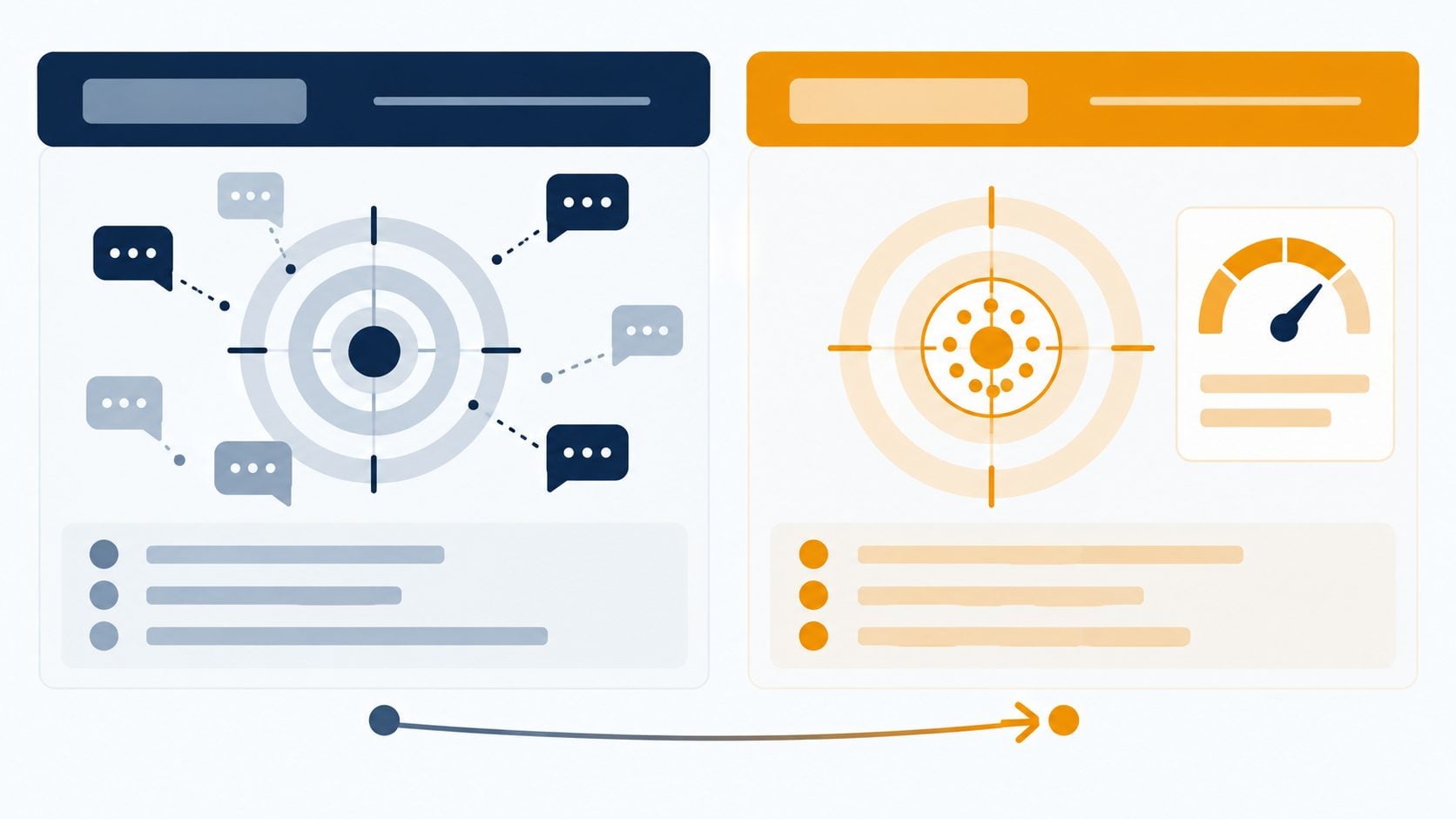
Every large language model you've used — ChatGPT, Claude, Gemini — was optimised with some version of Reinforcement Learning with Human Feedback (RLHF) or Reinforcement Learning with Verifiable Rewards (RLVR): reward the model for writeups and chat responses humans prefer, or for outputs that can be programmatically checked.
TypeSafe trained Jev differently, with a method they call Reinforcement Learning for Calibrated Decisions (RLCD). Instead of optimising for "text a human likes," it optimises for epistemically honest probabilities on structured decision tasks — meaning the training objective isn't "sound convincing," it's "be right, and know when you might not be." That's a genuinely different target function, not a fine-tuning trick on top of an existing LLM (Source: TypeSafe AI).
This is the part most coverage skips past to get to the flashy numbers — but it's the part that actually explains the flashy numbers.
2. What It Actually Outputs
Here's the architectural pivot: Jev doesn't generate text at all.
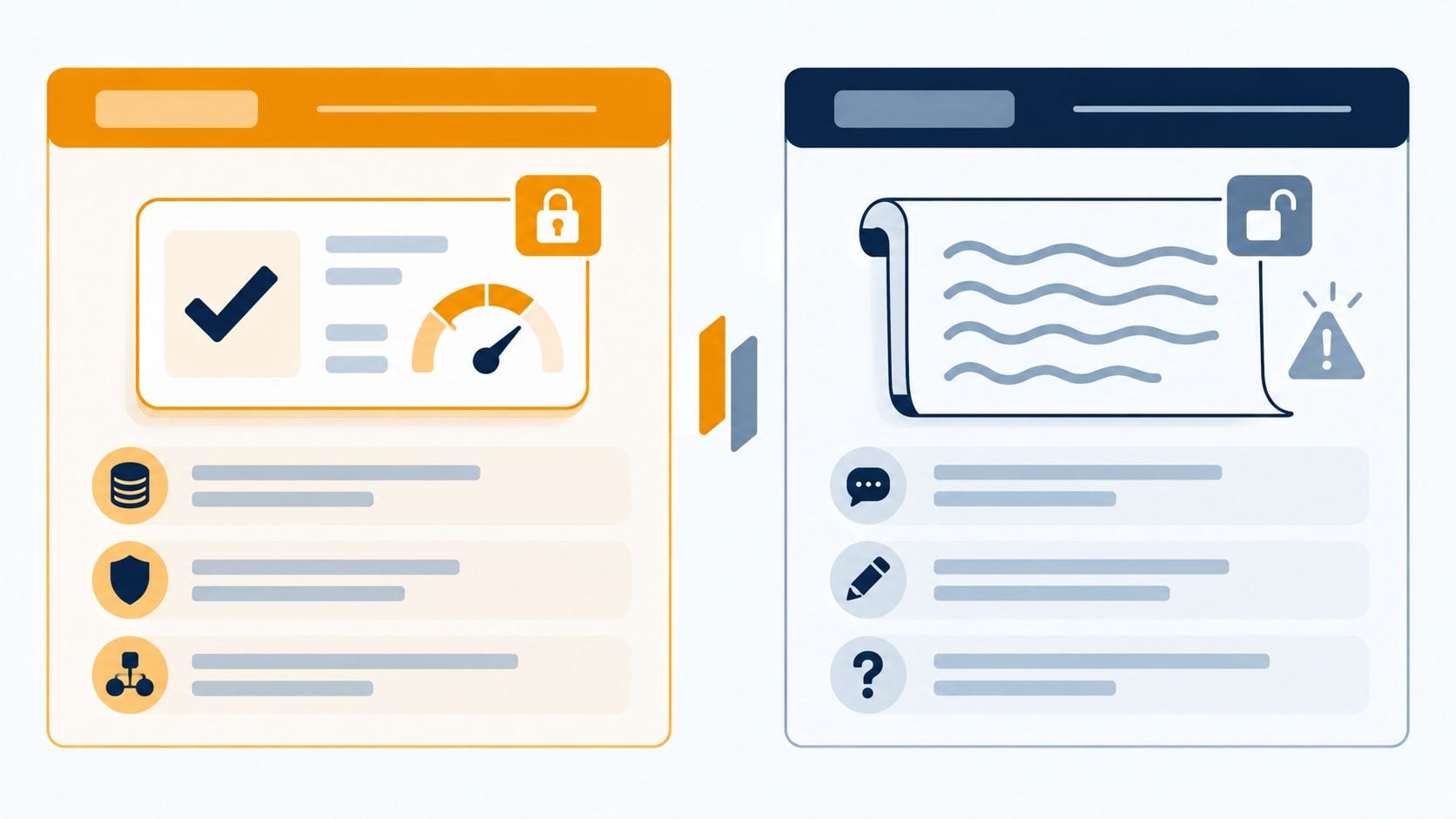
Give it unstructured state — a document, a transaction record, a paragraph of case notes — plus a set of pre-defined typed questions, and it returns every answer in parallel, each with a calibrated confidence score, in a single pass. No tokens generated one at a time. No string to parse afterward. Because every possible output is defined in advance by a schema, TypeSafe's claim that Jev "can't hallucinate" isn't a marketing flourish — it's a type-system guarantee, the same way a function with a fixed return type literally cannot return the wrong shape (Source: TypeSafe AI).
The trade-off is real and TypeSafe says so plainly: Jev cannot write an email, generate code, or explain its reasoning in prose. Ask it to produce anything a human needs to read, and it's the wrong tool. It only does one job — decide — and it was built to do that one job well.
3. Latency
TypeSafe publishes end-to-end response times of 70–500ms. For comparison, frontier LLMs on comparable tasks run 3 to 329 seconds end-to-end, largely because sequential, one-token-at-a-time generation is inherently slower than a single parallel pass over a fixed set of questions (Source: TypeSafe AI).
That gap matters less for a chatbot — a human is going to spend several seconds reading the response anyway — and matters enormously the moment the decision is embedded inside a workflow, where every millisecond is added latency for the customer or the process, not thinking time for a reader.

4. Cost
TypeSafe prices Jev at US$0.042 per million input tokens, with output free. Independent coverage of its published workflow benchmarks cites figures of up to 193x faster than Claude Sonnet 5 and 444x cheaper than Opus 5 on classification-style tasks (Source: TypeSafe AI).
5. It's a Deep Tech Product — and This Is the Part That Matters Most
This is the detail that separates System One Models from most "new AI buzzword" moments: it isn't a prompt trick, a fine-tune, or an API wrapper with a fresh name. It's deep tech — a new model architecture, a new parallel sampler, and a new training method (RLCD), built by a team led by Diogo Almeida, who worked on the instruction-following research behind ChatGPT at OpenAI before founding TypeSafe.
We drew this same line in our Deep AI vs Applied AI post: deep tech means substantial scientific or engineering breakthroughs, long R&D cycles, and heavy capital before anything is commercially viable — the opposite of a weekend's fine-tuning job. That's exactly what TypeSafe describes: two years in stealth, a new architecture, a new sampler, a new RL objective. Whether or not Jev specifically becomes the category standard, or gets matched by a hyperscaler's own structured-output model next quarter, the underlying research bet is real — which is precisely why it's worth your attention rather than a shrug.

Why This Matters When You're Building Enterprise AI Products
We build AI-enabled products for clients in BFSI and the broader enterprise market, and every one of the five points above shows up directly on a client's P&L or risk register — not as trivia.
Cost compounds into your run bill forever. We wrote about this in our AI total cost of ownership breakdown: the "Run" layer recurs for the life of the product, and agentic token consumption is the single biggest thing quietly inflating it. A workflow architected around the right shape of model for each step — structured decisions to fast, cheap models; genuine generation reserved for frontier LLMs — doesn't need re-architecting every time token pricing shifts.
Zero hallucination isn't a nice-to-have for regulated decisions. A credit pre-screen, an AML flag, a claims-routing call — these are decisions your compliance team needs to defend, not paragraphs your customer reads for tone. A type-system guarantee against hallucination, paired with a calibrated confidence score per decision, is a materially stronger position under PDPA and AIGE-aligned audit requirements than a free-text chain-of-thought that has to be re-interpreted after the fact.
Decision-making quality is now separable from writing quality. For years, "is the AI good?" meant "does it write convincingly?" That conflation was always a poor fit for BFSI workflows — AML scoring, KYC classification, claims triage — where nobody needs prose, they need a correct, auditable, fast answer. The emergence of models purpose-built for decisions rather than text is a sign the market is finally separating those two questions, and it's a separation we've been designing for on client architectures already.
The Malaysian Math
The workloads we see most in Malaysia are exactly the decisions this category targets: AML/fraud transaction scoring, motor and general insurance claims triage, SME credit pre-screening, KYC document classification — all running against Malaysia's RM87.4 billion in AI-driven digital investment in 2025 and the AI Nation 2030 push toward 30% of GDP from the digital economy (Source: The Edge Malaysia). A 5–30x token multiplier on a workload scaled to national ambition isn't a rounding error on the P&L — and MDEC's MDAG-AI grant, which co-funds up to 70% of qualifying build cost capped at RM2 million (Source: MDEC), still only touches the build layer. The architecture choice made this year is what controls the run cost for years after the grant is spent.
The Symprio Approach: Staying Ahead of the Buzzword So You Don't Have To
New model categories will keep showing up — some will be genuine deep tech, most won't be. Our job is knowing which is which before it's your budget on the line. Three principles guide that:
We run the five-point checklist on every announcement that reaches a client conversation. Training method, output shape, latency, cost, and deep-tech test — not the press release headline.
We architect for decision/generation separation from day one. Whatever the "best" structured-decision model is this quarter, a workflow built to route decisions away from chat completions doesn't need to be rebuilt when the model landscape shifts again.
We stay current so you don't have to track every launch. Symprio watches the frontier — deep AI labs, applied AI tooling, and now this new structured-decision category — so that when we design your architecture, it's built on this week's reality, not last year's assumptions.
If your team is weighing whether a new AI category actually changes anything for your roadmap, that's exactly the conversation to have with us before you commit budget either way.

Working With Us
We work with engineering and product teams in three modes:
Architecture review. Half-day deep-dive on your current or planned AI workflows and a written recommendation — including whether a new category like this genuinely changes your build — within a week.
Embedded build. One or two Symprio engineers join your team for 8–12 weeks to co-build a specific AI-enabled product, architected with decision/generation separation and the right model for each step.
Platform partnership. Longer-term engagement to ship a portfolio of products across claims, AML, onboarding, and internal knowledge — each priced and routed deliberately.
👉 Explore our agentic AI products & platforms →
👉 Get in touch → — we'll come back with a one-pager and a timeline within 48 hours.
👉 Read related: Deep AI vs Applied AI →
👉 Read related: Your AI Pilot Was the Cheap Part →
FAQ: Is Jev an LLM?
Is Jev an LLM (large language model)?
No. Jev generates no text at all — it takes structured state as input and returns typed decisions with calibrated confidence scores in a single parallel pass. LLMs like ChatGPT, Claude, and Gemini generate output token by token as strings; Jev has no equivalent generation step, which is also why it cannot hallucinate in the way LLMs can.
What are System One Models?
System One Models are a new AI model category introduced by TypeSafe AI with its model Jev in September 2026. Rather than generating text sequentially, they take structured program state as input and return typed decisions with calibrated confidence scores in a single parallel pass, trained with a method TypeSafe calls Reinforcement Learning for Calibrated Decisions (RLCD).
Why can't System One Models hallucinate?
Because every possible output is defined by a schema in advance, the model can only return a value that matches a pre-defined type — the same way a function with a fixed return type cannot return the wrong data shape. This is a structural guarantee, not a behavioural improvement layered on top of a text-generating model.
How much faster and cheaper are System One Models than LLMs?
TypeSafe publishes end-to-end response times of 70–500ms versus 3–329 seconds for comparable frontier LLM tasks, with input pricing of US$0.042 per million tokens and free output. Independent coverage cites internal benchmarks of up to 193x faster and 444x cheaper than specific frontier models on classification tasks — figures that are vendor-reported and worth validating on your own workload before committing.
Is a System One Model a replacement for LLMs like ChatGPT or Claude?
No. System One Models cannot generate text, write code, or explain their reasoning in prose — they are unsuited to chat, copiloting, or anything a human needs to read. They target a different job: high-volume, structured decisions where the possible answers are known in advance, alongside LLMs rather than instead of them.
Why does zero-hallucination decision-making matter for enterprise AI in Malaysia?
Typed decisions with calibrated confidence scores are easier to audit under PDPA and AIGE-aligned governance than free-text reasoning, because the decision and the model's stated confidence are structured data rather than prose that must be re-interpreted after the fact — directly relevant to BFSI use cases like AML scoring, claims triage, and KYC classification.
Sources & Further Reading
PasqualePillitteri.it — TypeSafe Launches Jev, a Chatless AI Model That Claims to Beat Claude 193x
DataCamp — Jev: TypeSafe's System One Model That Never Hallucinates
OneReach.ai — The AI Token Trap: Why the Real Cost of AI Isn't What You Think
AgentUI — The Hidden Cost of Agentic AI: Why AI Agent Bills Keep Growing in 2026
Advisori — AI Costs in 2026: Why Enterprise AI Spend Is Exploding
The Edge Malaysia — AI Nation 2030 and Malaysia's Next Phase of Growth
MDEC — Malaysia Digital Acceleration Grant: Artificial Intelligence (MDAG-AI)
Symprio — Deep AI vs Applied AI: The AI You Use Every Day Is Not the AI Being Built
Symprio — Your AI Pilot Was the Cheap Part: The Real Total Cost of Ownership of AI Products
#Symprio #EnterpriseAI #AIArchitecture #AgenticAI #AIProducts #BuildNotBuy #Malaysia
Symprio builds AI products that are priced for ownership — not just for the demo. Find us at symprio.com.