The audio edition couldn't be loaded right now — the written post below has everything.
63.6% of 2026 frontier AI model releases didn't ship on announcement day. Why model availability is now a procurement risk for regulated enterprises.
📰 Two Demographic Reports, Filed the Same Month
In July 2026, Singapore's Immigration and Checkpoints Authority published a number that made the front pages: 29,864 live births in 2025 — down 11.4% in a single year, and the first time the count has fallen below 30,000 since independence (Source: CNA).
The resident total fertility rate is 0.87. Replacement is 2.1. Singapore is running at roughly 41% of the rate required to hold its population steady, and Deputy Prime Minister Gan Kim Yong told Parliament in February that if 0.87 holds, reversing it becomes "practically impossible" over time.
The government's response has been substantial and fast. At the National Day Rally on 23 August 2026, Prime Minister Lawrence Wong announced the SG Child Support Package: up to S$62,000 per child, rising to around S$70,000 once the MediSave Grant for Newborns and Edusave contributions are counted — replacing the Baby Bonus Scheme and the Large Families Scheme entirely, and paid at the same level regardless of birth order. Childcare leave rises to 8, 10 or 12 days. Government-supported childcare fees fall to S$150 a month by 2030 (Source: Strategy Group, Prime Minister's Office).
That is a serious, well-designed policy aimed at a genuinely hard problem, and Singaporeans should have it.
We would like to place a completely unrelated report beside it.
⏱️ The Comparison Nobody Asked For

Let's get the bad version out of the way first, because someone will try it: AI product releases did not outnumber Singaporean babies. Singapore averaged about 82 births a day in 2025. Nothing in the AI industry ships at that rate. If you see that comparison on LinkedIn, it's decoration, not arithmetic.
The comparison that does work is the generation cycle.
Singapore | The AI frontier | |
|---|---|---|
One generation takes | 32.1 years — the median age of a first-time mother, up from 31.3 in 2021 | 63 days — Gemini 3.5 Flash reaching GA on 19 May 2026, to Gemini 3.6 Flash on 21 July |
Fertility rate | 0.87 children per woman | Google alone: 5 model releases in one 102-day window |
Direction of travel | −11.4% year on year | 11 frontier launch events, 5 labs, one quarter |
Cost per unit | ~S$70,000 of state support per child | US$5–$50 per million tokens, falling |
(Sources: CNA; Strategy Group PMO; Axis Intelligence Research. Generation-cycle ratio is Symprio's own calculation from those figures.)
32.1 years is 11,724 days. Divide by 63.
The AI frontier turns over a generation roughly 186 times faster than Singapore does.
Singapore is spending S$70,000 per child to move a number that will not show up in the labour force until the 2050s. Your model vendor's entire roster regenerates before your procurement committee finishes reviewing the first one.
That's the joke. Now here's the part that should actually change how you architect.
🚪 The Frontier Didn't Slow Down. It Grew a Gate.
There's a comfortable story circulating that the labs are easing off — that security concerns have put the brakes on frontier releases. It's a nice story. The data doesn't support it.
Anthropic shipped Opus 5, Sonnet 5, Fable 5 and Mythos 5 this year. OpenAI shipped the GPT-5.6 family. Google shipped four Gemini variants in fourteen weeks. DeepSeek shipped two 2026-generation models with open weights on the same day. Nobody slowed down.
What changed is how they ship.
Of eleven frontier launch events logged between 24 April and 3 August 2026, seven — 63.6% — did not reach unrestricted general availability on the day they were announced (Source: Axis Intelligence Research AI Model Release Tracker). Every flagship in that window arrived through a gate of some kind: a partner programme, a limited preview, a verified-identity requirement, a geographic restriction, or an export control.
Only the small models shipped clean. Three Google Flash-tier releases and DeepSeek's open-weight drop went from changelog to callable in zero days. The pattern is not "AI is slowing." The pattern is: the top of the market now ships behind a gate, and the bottom of the market doesn't.
🔍 What the Gates Actually Looked Like
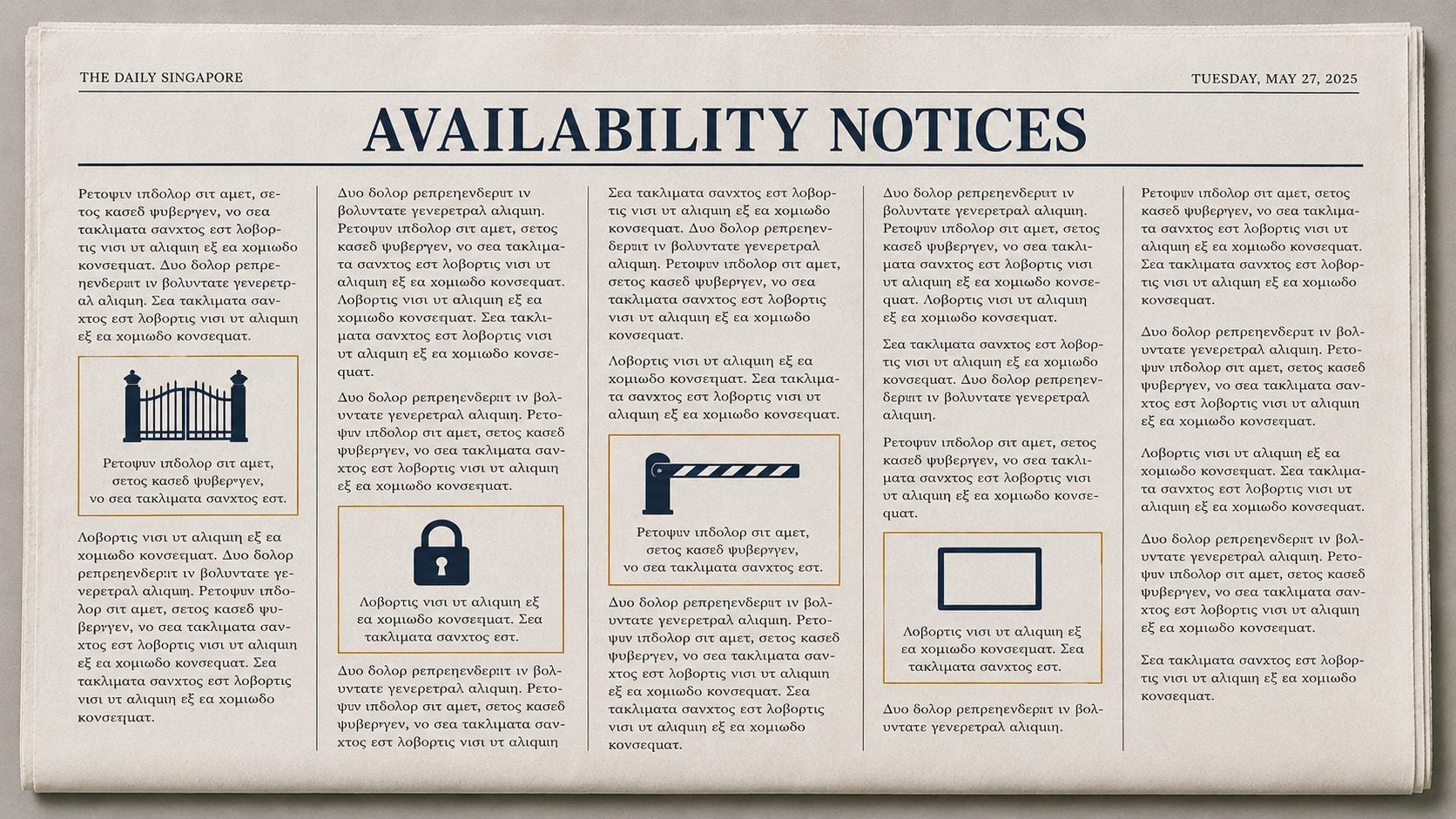
The specifics are worth reading, because each one is a different class of risk.
A safety classifier that routes around you. Anthropic launched Claude Fable 5 on 9 June 2026 with classifiers that hand cybersecurity, biology, chemistry and distillation queries to a weaker model — Claude Opus 4.8 — rather than answering them. Anthropic tuned the safeguards conservatively, acknowledged they would catch some benign requests, and published the fallback rate: under 5% of sessions. Mythos 5 is the same underlying model with the cyber safeguards lifted, available only to a small number of vetted organisations through Project Glasswing.
A government that isn't yours. Three days after launch, both Mythos-class models were suspended to comply with a US Department of Commerce export-control directive. Access was restored on 1 July — eighteen days offline, by order of a regulator no Malaysian or Singaporean enterprise has any standing with.
A preview you weren't invited to. OpenAI's GPT-5.6 family reached general availability on 9 July 2026, thirteen days after a limited preview restricted to selected partners. OpenAI describes its cyber safeguards as blocking roughly ten times more potentially harmful activity than previous models, and previewed the model to the US government ahead of public launch.
An announcement that never became a product. Gemini 3.5 Pro was announced on 19 May 2026. Seventy-eight days later, Google's own API release notes still carried no general-availability line for it — while every sibling in the family had one.
Read those four together and a single operational fact emerges: in 2026, "announced" and "available to you" are different events, separated by anything from zero to seventy-eight days, for reasons published in the release note itself.
Editorial disclosure: this post was drafted using Claude, made by Anthropic. Anthropic is a named party in the events described above.
🧨 This Is a Procurement Problem, Not a Press-Release Problem
Here's the part most boards haven't priced.
If you built a production workflow on a specific model ID, and that model went dark for eighteen days because of an export-control directive, what happened to your service level agreement?
For most enterprises, the honest answer is: nothing good, and nobody had a runbook.
The strengthening of model security is, on balance, excellent news — particularly for regulated buyers. Frontier labs hardening against cyber misuse, publishing fallback rates, and previewing to regulators before public launch is exactly the maturity curve a BNM-supervised institution should want from its technology suppliers. Nobody at Symprio is arguing against it.
But safety infrastructure has an operational shadow, and it lands on you:
Availability is now a policy variable. A model can be withdrawn by a foreign regulator, not just deprecated by a vendor.
Capability is now conditional. A classifier can route your query to a weaker model mid-session, silently, in a small but non-zero share of cases. If your workflow touches security tooling, clinical text, or chemistry, that share is not evenly distributed — it concentrates precisely where your queries live.
Roadmaps are now unreliable. An announced model may simply never arrive.
None of that is a reason to avoid frontier models. All of it is a reason to stop treating a model ID as though it were a stable dependency.
The Malaysian Read
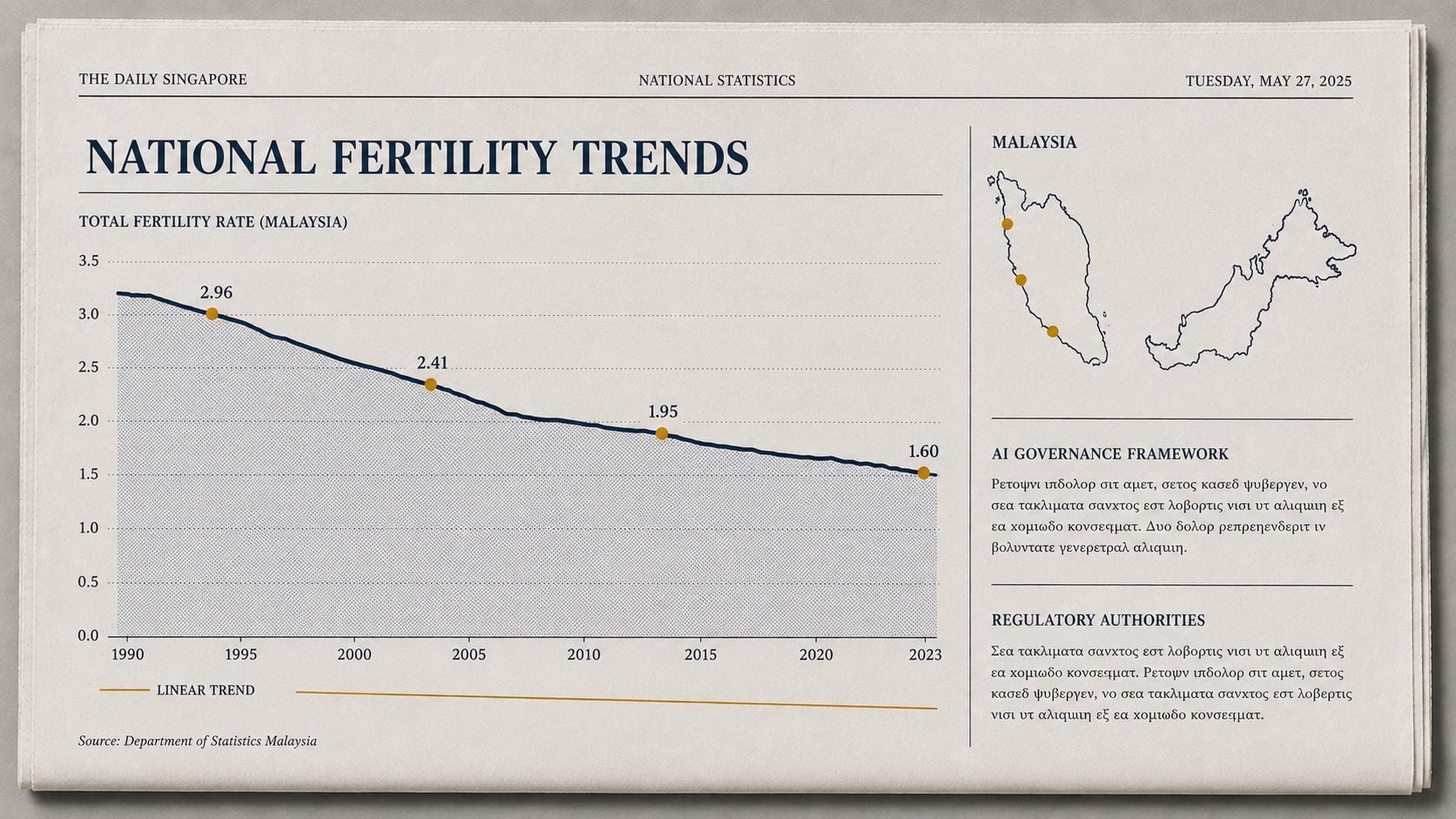
Malaysia is on the same demographic curve as Singapore, roughly five years behind. DOSM recorded 414,918 live births in 2024, down 9% year on year, with the total fertility rate falling to 1.6 — well under replacement (Source: SCMP, citing DOSM). The second quarter of 2026 recorded 90,726 births, down a further 6.1% on the same quarter a year earlier (Source: DOSM).
Which is exactly why the model-availability question matters more here than in most markets, and for a reason that has nothing to do with demographics directly.
A shrinking workforce means Malaysian enterprises will lean harder on agentic automation over the next decade — not as an efficiency play, but as a headcount-substitution necessity. The more load you put on agents, the more expensive an eighteen-day outage becomes. You cannot build a labour strategy on a dependency that a foreign export-control regime can switch off.
Layer on the regulatory reality. BNM's RMiT expects documented third-party dependency management and demonstrable operational resilience. PDPA constrains where data may be processed. AIGE and the National AI Office set governance expectations that assume you can explain what model made a decision. A silent classifier reroute to a different model, mid-workflow, is a governance event that most Malaysian AI architectures currently have no way to detect, let alone log.
There is a good answer available, and Malaysia is unusually well placed to use it: sovereign fallback. Locally hosted models — ILMU on YTL AI Cloud, among others — are callable by API with local data residency. They will not top a frontier benchmark. They also cannot be suspended by the US Department of Commerce.
💎 The Symprio Approach: Architect for the Faster Clock
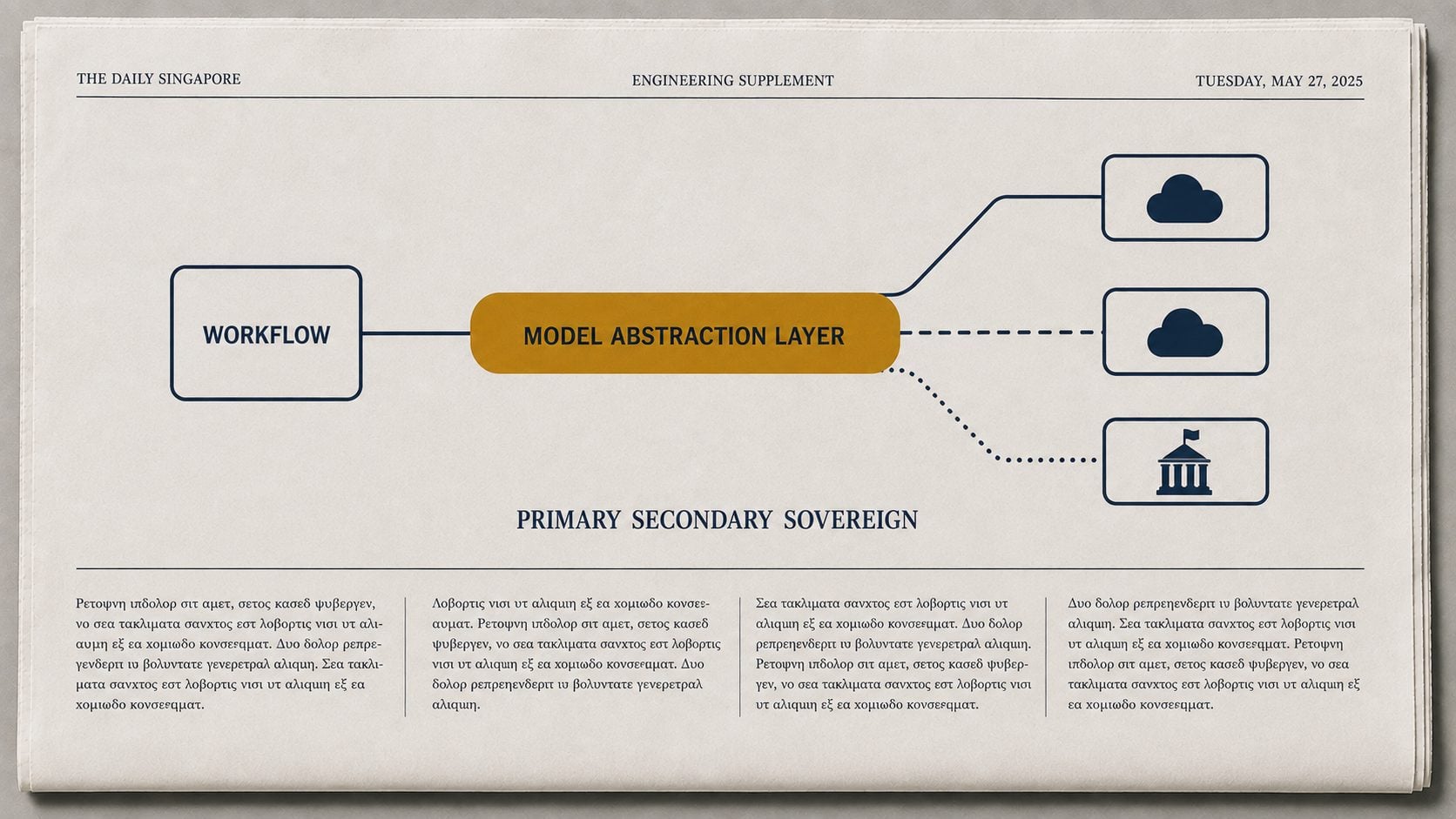
Symprio builds AI products for clients in regulated industries and operates its own product portfolio — and we design every one of them on the assumption that the model layer is the least stable thing in the stack. Four principles follow from that.
Never bind a workflow to a model ID. Every product we ship routes through a model abstraction layer with a declared primary, secondary and sovereign fallback. Swapping a provider is a configuration change, not a rebuild. When a model goes dark for eighteen days, the workflow degrades gracefully instead of stopping.
Log the route, not just the result. If a classifier hands your query to a different model, that is an auditable event under any reading of AIGE and RMiT. Our composable enterprise architecture practice → instruments which model answered, at what tier, with what fallback — so a governance question has an answer that doesn't require a vendor support ticket.
Right-size before you reach for the frontier. The gating pressure is concentrated at the flagship tier. Small and mid-tier models shipped with zero lag throughout 2026, and most enterprise workflows — extraction, classification, routing, summarisation — never needed a flagship. Reserve frontier reasoning for the small share of tasks that genuinely earn it, and most of your availability exposure disappears along with most of your inference bill.
Put a sovereign option in the routing table from day one. Not as a compliance checkbox, but as a live, tested path. Sovereign-cloud deployments → aligned to BNM expectations, PDPA and AIGE, with locally hosted models wired in and exercised — so the fallback works on the day you need it, rather than being discovered during the incident.
💬 Over to You
Where does your organisation sit on this?
Do you know which specific model IDs your production workflows depend on today?
Could you answer a BNM examiner asking which model made a given decision — and whether it was the one you specified?
If your primary provider went dark for eighteen days tomorrow, what happens?
If any of those questions produced a pause, that pause is the finding.
📞 Let's Build Something Real
Singapore is spending S$70,000 a child to move a curve that compounds over thirty years. Your model layer regenerates every nine weeks. Those two clocks demand very different architectures — and most enterprise AI stacks were built for the slow one.
Reach out to the Symprio team and let's map your model dependencies before a regulator or an export-control directive maps them for you.
👉 Explore our Agentic AI products & platforms →
👉 Book a 30-minute call → — no slide deck, just whiteboard thinking
👉 Read related: Deep AI vs Applied AI →

❓ FAQ: Frontier AI Model Releases and Availability Risk
How many frontier AI models were released in 2026?
The Axis Intelligence Research tracker logs 11 frontier model launch events between 24 April and 3 August 2026, each traced to a developer-published announcement or changelog. That count deliberately excludes fine-tunes, community re-uploads and endpoint aliases, so it runs far below aggregator totals.
What does it mean for an AI model to ship "behind a gate"?
It means the model was announced but not immediately callable by any paying customer. Gates include partner programmes, waitlists, public previews, identity verification, geographic restrictions and export controls. In 2026, 63.6% of tracked frontier launches carried at least one.
Did Anthropic slow down its model releases for security reasons?
No. Anthropic released multiple models in 2026, including Opus 5, Sonnet 5, Fable 5 and Mythos 5. What changed is the gating: Fable 5 shipped with classifiers routing sensitive queries to a weaker model in under 5% of sessions, and both Mythos-class models were suspended for 18 days in June 2026 to comply with a US export-control directive.
Why is AI model availability a procurement risk?
Because a model your production workflow depends on can be withdrawn by a foreign regulator, silently rerouted by a safety classifier, or announced and never shipped. Any of those breaks a service level assumption. Under BNM RMiT, third-party dependency risk of this kind is expected to be documented and managed.
How do enterprises reduce AI model dependency risk?
Route every workflow through a model abstraction layer with declared primary, secondary and sovereign fallback options; log which model actually answered each request; reserve frontier-tier models for tasks that require them; and keep a locally hosted sovereign option live and tested rather than theoretical.
📚 Sources & Further Reading
CNA — Live Births in Singapore Fall by 11.4% to 29,864 in 2025 (reporting ICA's Report on the Registration of Births and Deaths, 27 July 2026)
Strategy Group, Prime Minister's Office — Marriage & Parenthood Measures at National Day Rally 2026
Axis Intelligence Research — AI Model Release Tracker 2026 (CC BY 4.0; individual entries carry primary-source links to developer announcements)
SCMP — Malaysia's Baby Bust Accelerates Shift Towards Greying Society (citing DOSM)
#Symprio #EnterpriseAI #AIGovernance #AgenticAI #SovereignCloud #ResponsibleAI #BNM #Malaysia
Symprio builds AI products for a model layer that changes every nine weeks. Find us at symprio.com.